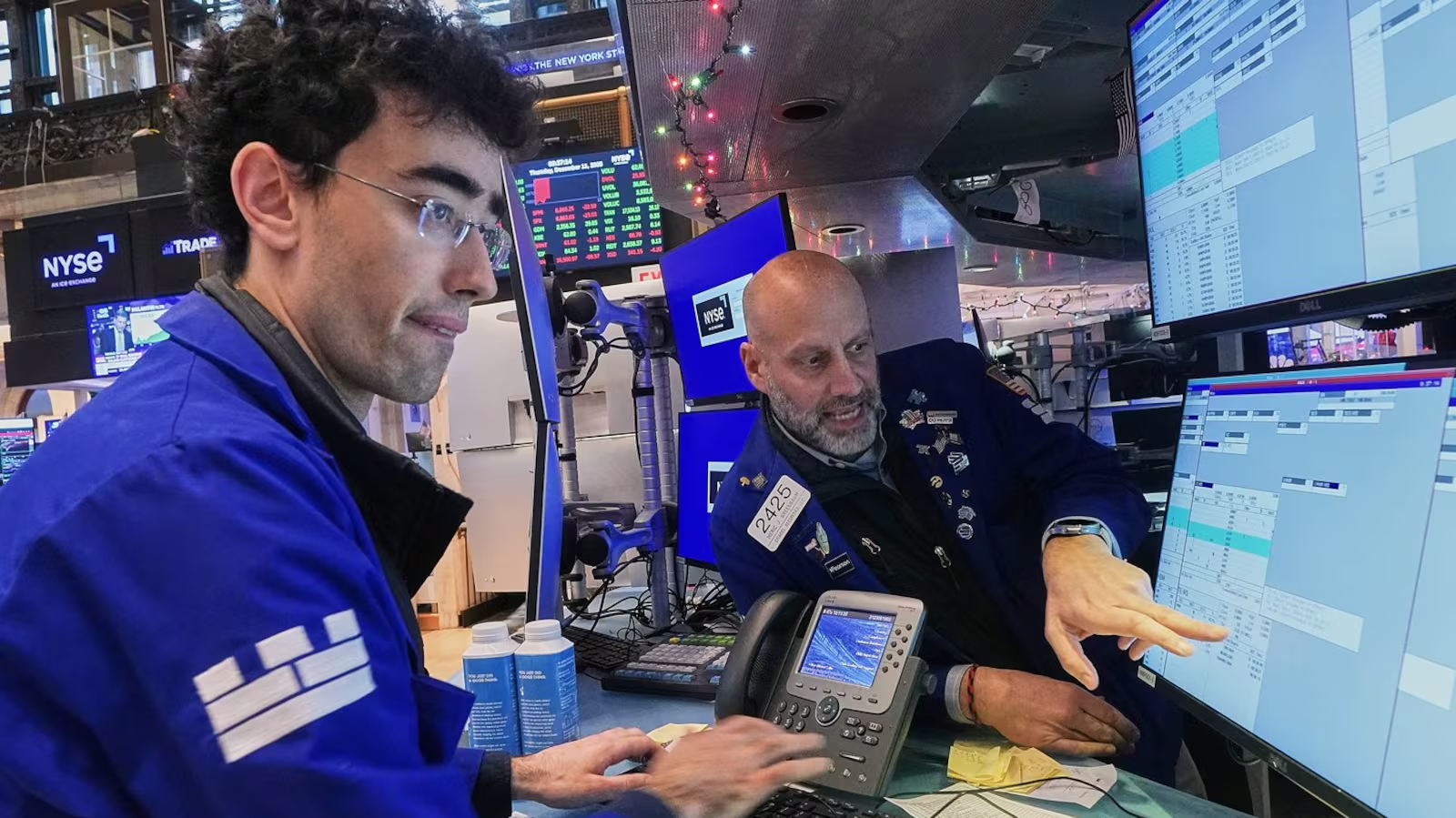
U.S. stocks opened lower on Monday as investors braced for a week packed with crucial economic reports that could determine the direction of interest rates and stock prices. The S&P 500 dropped 0.3% in afternoon trading, following its first losing week in the last three. Similarly, the Dow Jones Industrial Average fell 137 points, or 0.3%, and the Nasdaq Composite declined by 0.5%.
Technology stocks, including those in the artificial intelligence (AI) sector, were among the biggest draggers on the market. AI stocks had experienced volatile swings last week, contributing to the downturn. Nvidia, a chip company at the forefront of the AI boom, gained 1.7%, cushioning some of the losses on the S&P 500 after it dropped 4.1% last week.
On the other hand, Oracle saw a continued drop, falling 1.9% after a significant 12.7% decline the previous week, its worst in more than seven years. Broadcom also dropped by 5.1%.
Read Also
Jetour Cars in Canada 2025: What’s New?
Top American-Made Cars 2025: A Look at the Best
Impact of Inflation on Housing and Household Budget
Economic Reports to Drive Market Moves
Investors are turning their attention to several key economic updates set for this week. On Tuesday, the jobs report for November will be released. Economists expect the report to show that employers added 40,000 more jobs than they cut in the month, signaling continued job growth.
On Thursday, the focus will shift to the inflation report. Economists forecast that inflation remained at 3.1% in November, a figure still higher than policymakers would like. These reports are critical for the Federal Reserve, which is trying to balance the need for stronger growth with controlling inflation. The Fed faces a tough decision, as addressing one challenge—like inflation—could worsen the other, such as by affecting the job market.
The Fed’s Dilemma and Market Hopes
Market participants hope that the job market weakens just enough to prompt the Federal Reserve to lower interest rates, without triggering a recession. Chris Larkin, managing director at E-Trade from Morgan Stanley, said, “As long as the numbers don’t suggest employment is falling off a cliff, the market will likely welcome softer numbers.”
The unemployment rate will be closely watched in Tuesday’s report, with expectations of it staying at 4.4%. This would keep the rate near its highest level since 2021. A slower job market might give the Fed room to ease interest rates, which could provide a boost to the economy and investments.
Treasury Yields and Global Markets
In the bond market, Treasury yields eased ahead of the economic updates. The yield on the 10-year Treasury fell slightly to 4.18%, down from 4.19% on Friday. Meanwhile, stock indexes in Europe rose, following weaker finishes in Asia.
Hong Kong’s index fell 1.3%, and Shanghai’s index dropped 0.6% after China reported a drop in investment in factory equipment, infrastructure, and other fixed assets. These figures further signaled weak demand in China, the world’s second-largest economy.
Japan’s Nikkei 225 fell 1.3% after a quarterly survey by the Bank of Japan showed slight improvement in sentiment among major manufacturers. This news raised expectations that the Bank of Japan could proceed with an interest rate hike.
iRobot Faces Severe Losses After Bankruptcy Filing
On a more specific note, iRobot shares plummeted by 72.6% after the company, known for its Roomba vacuums, filed for Chapter 11 bankruptcy protection. The company’s stockholders are likely to face total losses, but an agreement with its primary contract manufacturer, Picea, will allow the company to be purchased through a U.S. bankruptcy court.