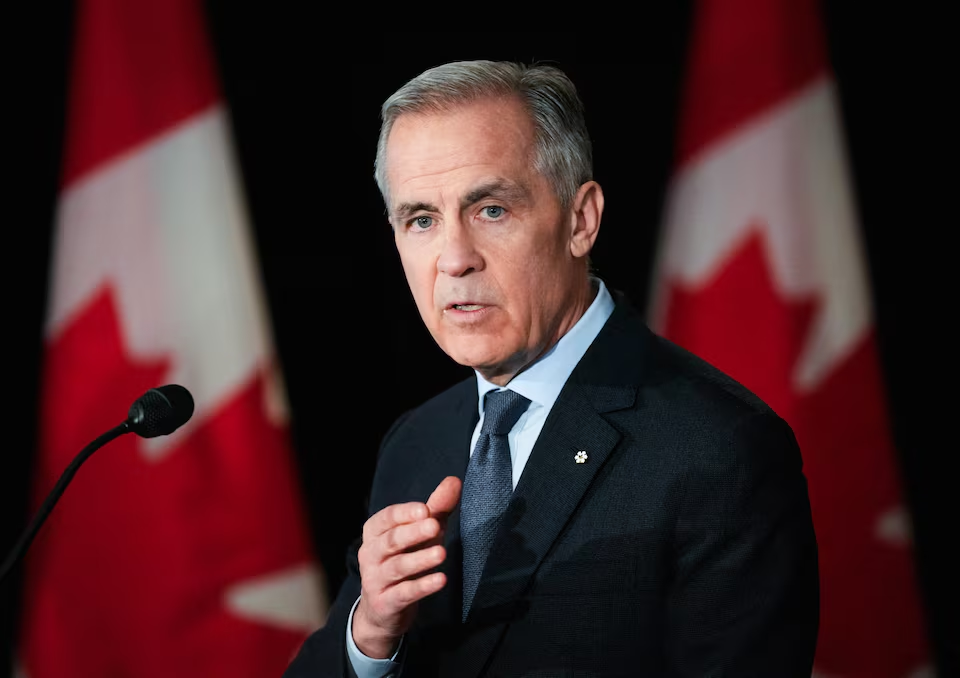
Canadian Prime Minister Mark Carney has stated he expects the United States administration to respect Canadian sovereignty. His comment follows a report that US State Department officials met with a group advocating for Alberta’s independence. The Financial Times revealed three meetings occurred with the Alberta Prosperity Project. This group seeks a referendum for the western energy-producing province to break from Canada. Consequently, Carney addressed the issue directly, emphasizing sovereignty while noting President Trump never raised Alberta separatism with him.
The APP, which argues federal policies stifle Alberta, reportedly seeks another meeting next month. It aims to request a five hundred billion dollar US credit facility. Alberta Premier Danielle Smith affirmed her desire to remain in Canada but cited polling showing thirty percent frustration with Ottawa. The situation injects a new tension into US-Canada relations, already strained by trade disagreements. British Columbia Premier David Eby condemned the separatist outreach to a foreign power as “treason,” highlighting internal Canadian divisions.
The Diplomatic Incident and Its Implications
The reported meetings represent a significant diplomatic breach if confirmed. For a US administration to engage with sub-national separatist groups challenges long-standing norms of non-interference among allies. Carney’s public statement serves as a calibrated warning. He expects respect for sovereignty but avoided escalating rhetoric. This approach reflects his view of Trump as a negotiator testing boundaries ahead of a USMCA trade pact review scheduled for later this year.
US Treasury Secretary Scott Bessent’s recent comments added fuel to the fire. He stated, “I think we should let them come down into the U.S.” When asked about a potential Alberta referendum, he added, “People want sovereignty. They want what the U.S. has got.” These remarks, from a senior cabinet member, suggest a level of sympathy or strategic interest within the Trump administration. They directly contradict Carney’s expectation of respect for Canada’s territorial integrity and internal affairs.
Alberta’s Grievances and Internal Politics
Alberta’s separatist sentiment is rooted in longstanding economic and political grievances. The province is a major oil and gas producer but feels hampered by federal climate policies and a lack of pipeline access. Premier Smith wants a new pipeline to the Pacific coast, but the route requires crossing British Columbia. Premier Eby has firmly rejected the idea, creating a regional stalemate. This frustration fuels groups like the APP, which sees independence as the only path to economic self-determination.
However, mainstream Alberta political leadership, including Premier Smith, does not endorse separation. Smith’s comment about thirty percent frustration acknowledges the political reality without endorsing the separatist solution. Her priority remains securing better terms within Confederation, notably through increased provincial autonomy and resource revenue control. The US meetings, therefore, involve a fringe group but tap into a real undercurrent of alienation that Ottawa must manage carefully.
The Broader Canada-US Relationship Context
Carney and Trump have repeatedly traded barbs in recent weeks. This incident occurs within a relationship experiencing unusual public friction between leaders. The upcoming review of the USMCA trade pact is a major point of contention. Trump has frequently used tough rhetoric on trade deficits and national security to gain leverage. Engaging with Alberta separatists could be another pressure tactic, signaling that US support is not unconditional.
Canada’s response must balance firmness with pragmatism. The country is deeply integrated with the US economically and militarily. A full-blown diplomatic crisis would be damaging. Carney’s statement was therefore firm but not confrontational. He reiterated an expectation of normal diplomatic conduct between allies. Behind the scenes, Canadian officials are likely seeking clarification and demanding an end to any further contact with separatist entities. The goal is to shut down this channel without a public spectacle.
Potential Consequences and the Path Forward
If US meetings with separatists continue, Canada would face limited but serious options. It could formally protest through diplomatic channels or raise the issue in multilateral forums like NATO. Such a move would underscore the seriousness of the breach. However, escalation risks retaliatory actions on trade or other shared interests. Canada’s most effective tool may be domestic: strengthening national unity and addressing Alberta’s legitimate concerns to undercut separatist narratives.
For the US, the actions risk damaging its reputation as a reliable ally. Other allies with internal separatist movements, like Spain or the UK, would view such interference with alarm. It could embolden similar groups worldwide, creating unintended foreign policy blowback. The State Department may yet clarify that the meetings were low-level or exploratory, not reflecting administration policy. This would be a typical method to de-escalate while saving face for all parties involved.
The Stakes for National Unity and International Norms
The principle of non-interference in the domestic affairs of sovereign states is a cornerstone of international relations. Its erosion between neighbors and closest allies signals a troubling shift. For Canada, the immediate concern is the symbolic encouragement given to a marginal separatist movement. The long-term concern is the precedent set for great power meddling in the internal politics of smaller partners.
Prime Minister Carney’s defense of Canadian sovereignty is therefore about more than Alberta. It is about upholding the rules-based order that has governed US-Canada relations for over a century. His expectation is a simple one: that an ally respects the other’s fundamental right to exist as a unified nation. The coming weeks will reveal whether the US administration shares that basic expectation or is willing to instrumentalize internal divisions for tactical gain.