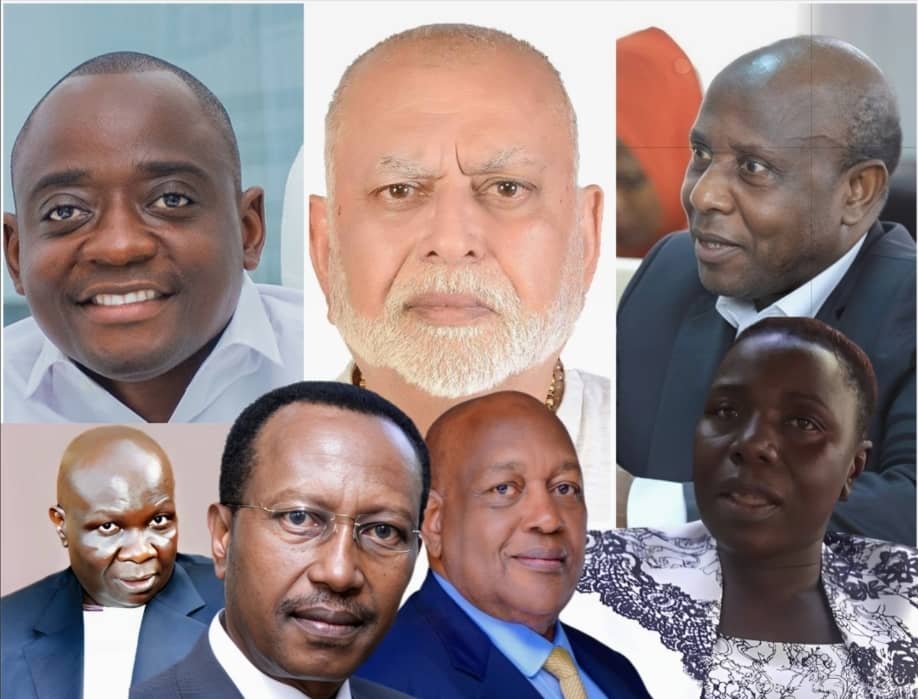
Uganda’s richest billionaires 2026 reflect a private capital class that has grown faster than the country’s public markets. In an economy valued at roughly 65 billion dollars, the top private fortunes now exceed 10 billion dollars in combined estimated wealth. That concentration is significant. It reveals how asset ownership, rather than financial market exposure, defines economic influence in Uganda today.
Unlike stock-driven economies where billionaire status rises and falls with share prices, Uganda’s richest billionaires 2026 have built their wealth through tangible assets. Commercial real estate dominates the hierarchy. Petroleum distribution supplies recurring liquidity. Manufacturing, hospitality and telecommunications equity add structural depth. As a result, the architecture of wealth in Uganda is grounded in physical infrastructure and long-cycle reinvestment.
Below is a ranked overview of Uganda’s richest billionaires 2026 based on asset-backed valuation models and publicly verifiable holdings. Figures are indicative estimates rather than audited declarations.
1. Hamis Kiggundu – Approx. $1.35 Billion
Hamis Kiggundu tops the list of Uganda’s richest billionaires 2026. His wealth is primarily anchored in high-density commercial real estate across Kampala. Through repeated development cycles, rental income has been reinvested into mixed-use towers and retail complexes.
In addition, beverage manufacturing and fintech exposure broaden his portfolio beyond property. Strategic land banking strengthens long-term appreciation potential. Consequently, his model reflects both property dominance and industrial expansion.
2. Sudhir Ruparelia – Approx. $1.2 Billion
Sudhir Ruparelia follows closely with a diversified conglomerate structure. Commercial real estate anchors his balance sheet. Meanwhile, hospitality estates generate revenue tied to tourism and conferences.
Insurance, education and floriculture exports add institutional and foreign exchange-linked income streams. Therefore, his wealth structure balances asset-backed stability with operational turnover.
3. John Bosco Muwonge – Approx. $850 Million
John Bosco Muwonge’s fortune is heavily concentrated in Kampala’s central business district. Prime commercial buildings across high-footfall corridors generate recurring rental income.
Because inner-city land is scarce, appreciation and tenant density drive durable capital growth. His profile underscores the power of property within Uganda’s richest billionaires 2026.
4. Drake Lubega – Approx. $800 Million
Drake Lubega built his fortune through extensive commercial property accumulation. Arcades and mixed-use buildings in busy trading zones generate steady rental turnover.
Although industrial and education-linked assets add modest diversification, property remains his core valuation driver.
5. Mansour Matovu – Approx. $785 Million
Mansour Matovu transitioned from logistics and trading into large-scale commercial real estate. Multi-storey plazas now anchor recurring rental income.
Retail demand cycles influence performance. However, prime location ensures long-term stability.
6. Karim Hirji – Approx. $785 Million
Karim Hirji represents a diversified hybrid among Uganda’s richest billionaires 2026. Hospitality assets, commercial property and automotive distribution form the foundation of his wealth.
Tourism demand affects revenue. Nevertheless, landmark real estate holdings provide asset-backed resilience.
7. Christine Nabukeera – Approx. $710 Million
Christine Nabukeera’s wealth is rooted in premium residential and commercial property. Strategic land acquisition and disciplined development define her capital model.
Valuation remains closely tied to rental yield performance and urban appreciation cycles.
8. Tom Kitandwe – Approx. $700 Million
Tom Kitandwe built his capital through commercial real estate expansion in strategic urban intersections. High tenant turnover supports recurring income.
Agribusiness land and telecom-linked investments introduce additional diversification.
9. Guster Lule Ntake – Approx. $670 Million
Guster Lule Ntake blends hospitality, agriculture and manufacturing. Food processing and beverage production extend value beyond primary commodities.
Property holdings provide balance-sheet stability. His profile reflects an industrially diversified approach within Uganda’s richest billionaires 2026.
10. Godfrey Kirumira – Approx. $615 Million
Godfrey Kirumira built his base in petroleum distribution. Fuel retail provides recurring liquidity tied to transport demand.
Subsequent diversification into telecommunications infrastructure and commercial real estate strengthened long-term income visibility.
11. Charles Mbire – Approx. $600 Million
Charles Mbire stands out for his equity-driven profile. His stake in MTN Uganda links wealth to corporate earnings and dividend policy.
Energy and extractive investments broaden strategic exposure. Consequently, his valuation is more market-sensitive than property-dominant peers.
12. Amos Nzeyi – Approx. $550 Million
Amos Nzeyi’s fortune is anchored in beverage manufacturing and food production. Production scale and consumer demand drive enterprise valuation.
Hospitality and international investments further diversify revenue streams.
13. Ahmed Omar Mandela – Approx. $535 Million
Ahmed Omar Mandela integrates petroleum retail, food service and agro-processing. Distribution networks generate high-volume cash flow.
Consumer-facing brands capture urban spending growth, reinforcing earnings resilience.
14. Haruna Ssentongo – Approx. $490 Million
Haruna Ssentongo’s wealth centers on redevelopment-focused commercial property. Markets and arcades in busy corridors generate recurring rental turnover.
Strategic positioning near transport hubs enhances appreciation potential.
15. Patrick Bitature – Approx. $220 Million
Patrick Bitature’s capital originated in telecommunications distribution before expanding into energy infrastructure and hospitality.
Although infrastructure projects require significant capital, they offer long-term asset-backed stability under predictable regulatory conditions.
The Bigger Picture
Taken together, Uganda’s richest billionaires 2026 reveal a consistent frontier-market wealth pattern. Commercial real estate dominates. Petroleum distribution and manufacturing follow closely. Equity participation and infrastructure investments provide diversification.
Moreover, access to prime land and development finance creates high entry barriers. Consequently, capital compounds fastest for those who control income-producing infrastructure.
In 2026, Uganda’s richest billionaires do not merely represent private wealth. They define the skyline, supply chains and industrial backbone of the country’s economy.
READ: Tensions Between U.S. and Venezuela Could Affect Canada’s Oil Industry