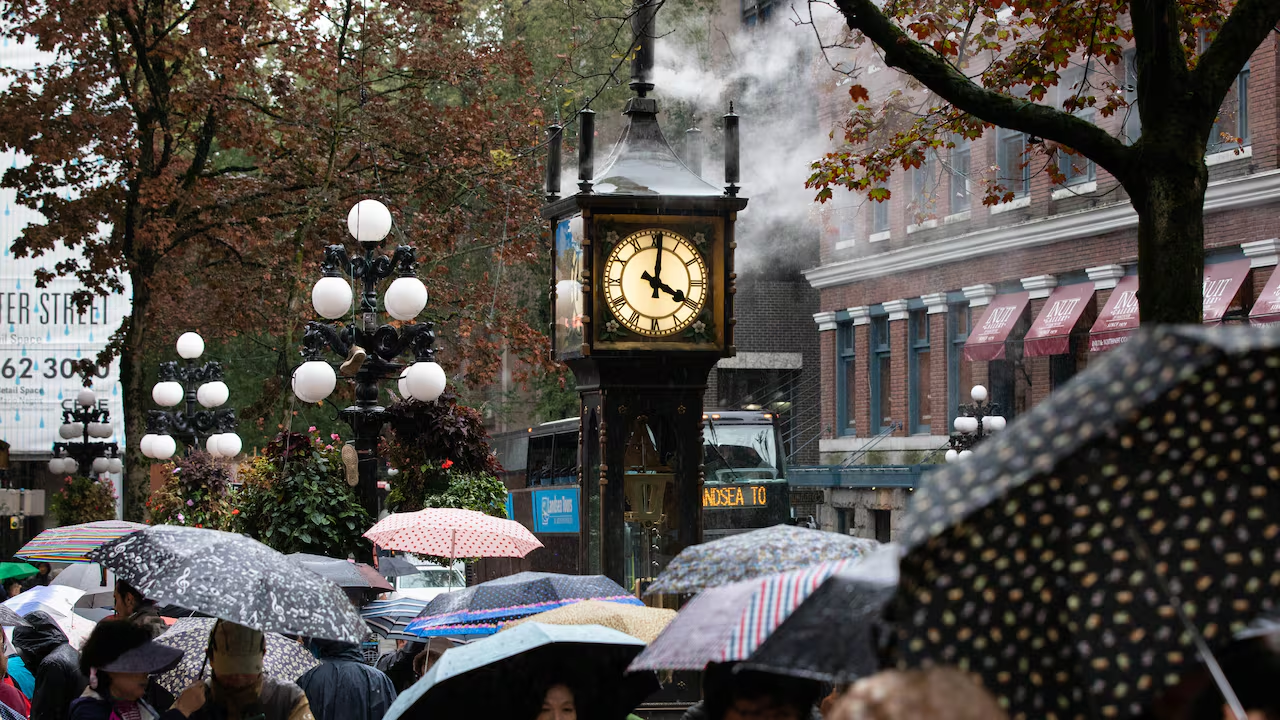
British Columbia’s decision to adopt permanent daylight time has reignited debate across Canada about ending seasonal clock changes. The move could influence other provinces that have long discussed eliminating the practice of changing clocks twice a year.
Premier David Eby announced that most of the province will change its clocks for the final time this weekend. The announcement marks a major shift in how the province manages time and daily schedules. It has also prompted political leaders in other regions to reconsider their own positions on the issue.
British Columbia’s New Time Policy
The province’s decision aims to remove the disruption caused by seasonal time changes. Officials say the twice-yearly shift can affect sleep patterns, productivity, and overall well-being.
Studies have shown that health risks sometimes rise shortly after clocks change. Some research links the transition to increases in heart attacks, strokes, and traffic accidents. Because of these concerns, many advocates argue that a permanent system could improve public health and safety.
Supporters also believe that a consistent schedule would make daily routines easier for workers, students, and families.
Other Provinces Consider Similar Moves
The announcement has sparked new discussions in several provinces. Alberta Premier Danielle Smith said her government will examine whether a similar policy would benefit Albertans.
Alberta voters narrowly rejected the idea in a 2021 referendum. The proposal failed by a small margin, with just over half of voters opposing the change.
Saskatchewan already avoids seasonal time adjustments. The province has followed Central Standard Time year-round since 1966.
Meanwhile, Manitoba Premier Wab Kinew said the province is not currently prioritizing the issue.
Eastern Canada Continues the Discussion
In eastern Canada, the debate continues but no final decisions have been made. Ontario passed legislation in 2020 that would allow a permanent time system. However, the law requires neighbouring jurisdictions to make the same move first.
The province wants coordination with Quebec and the U.S. state of New York to prevent complications for business and travel.
Quebec officials have acknowledged ongoing discussions. A recent public consultation found that most respondents supported ending the biannual clock change.
Concerns from Businesses and Critics
Despite support from some policymakers, critics have raised concerns about the shift. Some experts warn that darker winter mornings could affect commuters and students.
Business groups have also expressed caution. The Vancouver Airport Authority noted potential scheduling complications, while the Greater Vancouver Board of Trade warned about time differences with U.S. markets.
For now, most Canadians will still adjust their clocks this weekend. However, British Columbia’s decision has revived a long-running debate about whether seasonal clock changes should disappear entirely.