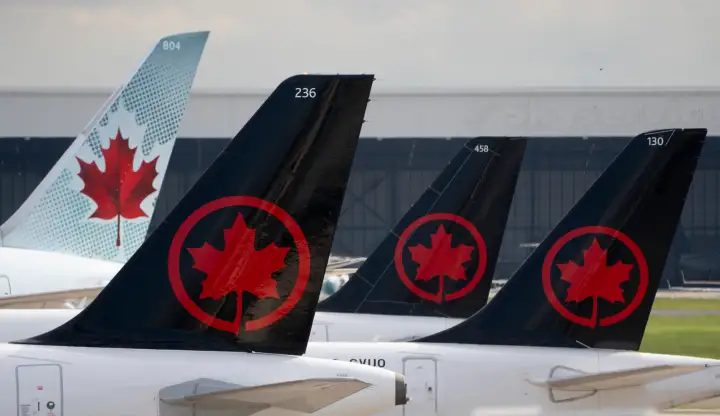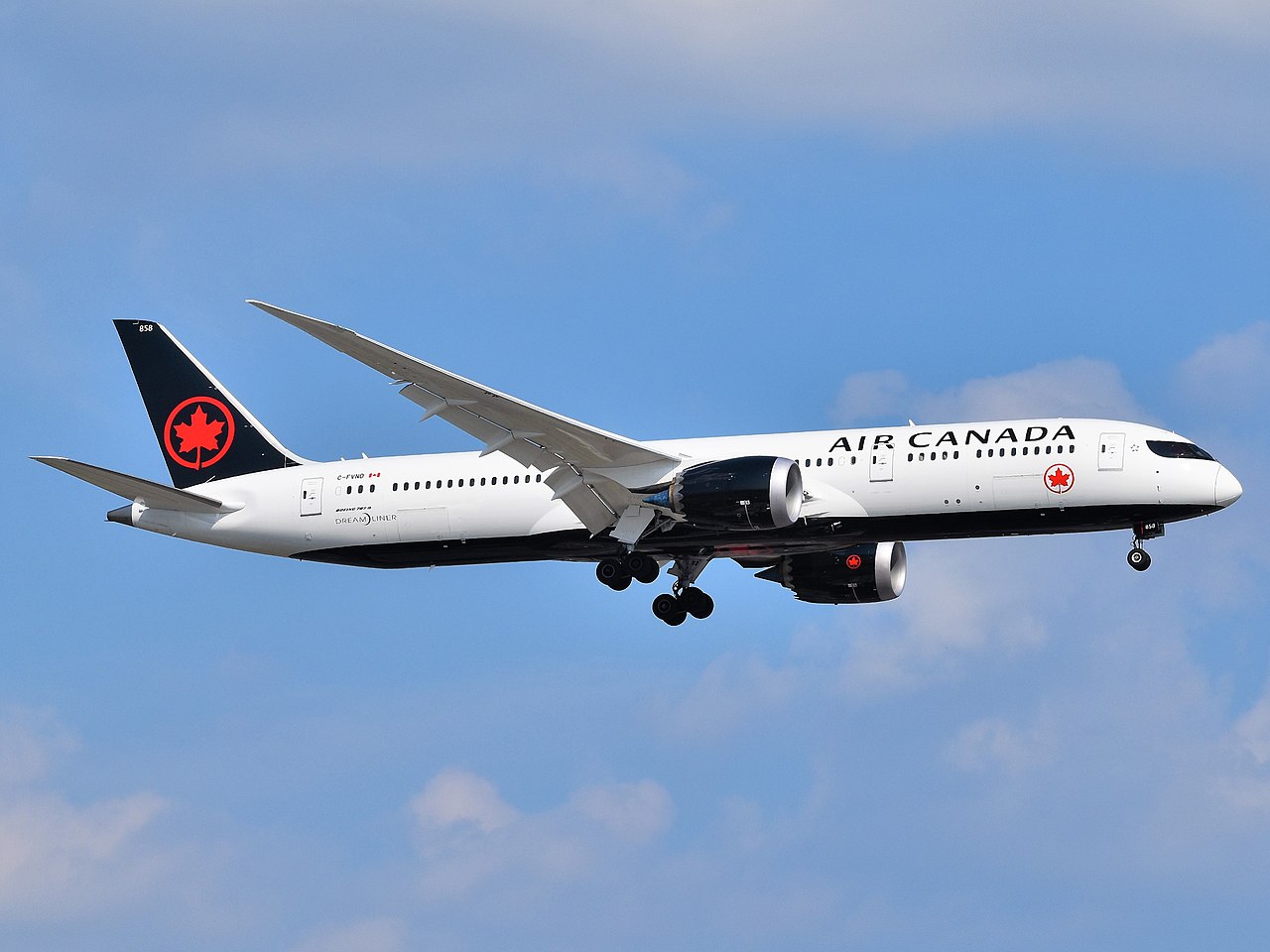
Air Canada is the flag carrier and largest airline of Canada, operating both passenger and cargo flights across 222 destinations in 47 countries. Headquartered in Saint-Laurent, Quebec, the airline maintains major hubs at Toronto–Pearson, Montréal–Trudeau, and Vancouver, with additional focus cities including Calgary, Halifax, and Ottawa. In 2023, Air Canada generated CA$21.8 billion in revenue and carried over 51 million passengers, supported by a workforce of more than 35,700 employees. It is also a founding member of the Star Alliance, the world’s largest airline alliance.
History of Air Canada
The origins of Air Canada date back to April 10, 1937, when the Canadian government established Trans-Canada Air Lines (TCA) under the Canadian National Railway. The first passenger flight took place in September 1937 between Vancouver and Seattle. By 1939, TCA launched its first transcontinental routes, linking Montreal and Vancouver.
In 1965, the airline was officially renamed Air Canada. A year earlier, Queen Elizabeth II had flown on the first aircraft bearing the new Air Canada livery. During the 1970s, the government protected Air Canada’s dominance in domestic routes, but the National Transportation Act of 1987 introduced deregulation, opening the skies to competition.
By 1988, Air Canada was privatized, and in 2000 it acquired Canadian Airlines, becoming the 12th largest airline in the world at the time. The company faced financial turbulence, including a major bankruptcy protection filing in 2003, but successfully restructured and relaunched under ACE Aviation Holdings in 2004. Canadian singer Celine Dion even became the face of the brand during its comeback campaign.
The 2000s and 2010s brought challenges and modernization. Rising fuel costs and the 2008 financial crisis strained the airline, while new management under Calin Rovinescu restored profitability from 2012 onward. Air Canada also introduced a fleet renewal program, ordering Boeing 777s and 787 Dreamliners alongside Airbus A220s and A320 family aircraft.
In 2019, Air Canada carried 51.5 million passengers. The government later acquired a 6.4% stake in 2021 to stabilize the airline during the COVID-19 pandemic, which had caused massive financial losses and temporary flight suspensions.
Air Canada Fleet and Subsidiaries
The Air Canada fleet is one of the largest in North America, with 353 aircraft including subsidiaries. For long-haul operations, the airline flies Airbus A330s, Boeing 777s, and Boeing 787 Dreamliners. For shorter routes, it uses Airbus A220s, A319s, A320s, A321s, and Boeing 737 MAX 8s.
Air Canada also operates through several subsidiaries:
- Air Canada Cargo – dedicated freight services with over 150 destinations.
- Air Canada Express – regional feeder flights operated by partners such as Jazz Aviation and PAL Airlines.
- Air Canada Rouge – a leisure-focused airline serving vacation destinations in Europe, the Caribbean, Mexico, and the U.S.
- Air Canada Jetz – a premium charter service for sports teams, entertainers, and corporate groups.
- Air Canada Vacations – offering travel packages that combine flights and accommodations.
Fleet modernization has been a major focus. The Boeing 747s were retired in 2004, replaced by more fuel-efficient Airbus A340s and later 787 Dreamliners. The airline also updated cabins through Project XM, a CA$300 million interior upgrade program that introduced flat-bed business seats, personal entertainment screens, and power outlets across its fleet.
Destinations, Business, and Global Role
Air Canada currently serves 64 domestic and 158 international destinations, covering North America, Europe, Asia, South America, Africa, and Oceania. The airline also operates fifth freedom flights, such as São Paulo–Buenos Aires and London–Delhi.
Financially, Air Canada has faced ups and downs. After losses in the early 2000s and during the COVID-19 crisis, the airline rebounded strongly in 2023 with CA$2.28 billion in operating income. It remains one of the top global carriers by fleet size and market capitalization.
As a Star Alliance member, Air Canada partners with airlines such as United Airlines, Lufthansa, Singapore Airlines, Emirates, and Air New Zealand. This network strengthens its global reach and offers passengers extensive connectivity.
Beyond business, Air Canada also plays a cultural and national role. As the national airline of Canada, it is a symbol of the country’s identity, linking communities across vast distances while representing Canadian hospitality abroad.