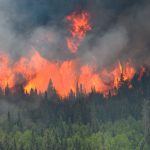
The Canada Second-Worst Wildfire Season is underway, with more than 7.3 million hectares burned so far this year. Experts warn this could become the new normal as climate change drives longer fire seasons and drier landscapes.
Scope of the 2025 Wildfires
According to the Canadian Interagency Forest Fire Centre (CIFFC) and Natural Resources Canada, the burned area is over twice the 10-year average for this time of year. To put it in perspective, it is roughly the size of New Brunswick.
This year joins 2023 and 2024 as one of the top 10 worst wildfire seasons since records began in 1972. Manitoba and Saskatchewan account for over half of the total burned area, but British Columbia, Alberta, and Ontario have also exceeded their 25-year averages. In response, multiple provinces have introduced strict fire bans, including Nova Scotia’s total ban on entering the woods.
Nationwide Response and International Aid
To combat the fires, Canada has called on military and coast guard assistance. Additionally, around 1,400 international firefighters have joined the effort. Newfoundland and Labrador have seen rare large-scale blazes, with one fire exceeding 5,200 hectares.
Yan Boulanger, a forest ecology scientist at Natural Resources Canada, says regions like Newfoundland are historically unaccustomed to such fires but may face them more often in coming decades. Meanwhile, Quebec has had a relatively mild season thanks to spring rains, though August’s dry weather has raised concerns.
Ecological and Climate Impacts
Wildfires are a natural part of many ecosystems, but repeated and severe seasons can cause regeneration failure — when forests cannot regrow for decades. This leads to reduced carbon storage and contributes to higher greenhouse gas emissions. The 2023 fires alone produced nearly a quarter of the world’s wildfire-related carbon emissions that year.
Health experts also warn that wildfire smoke increases the risk of respiratory illnesses and has been linked to conditions such as dementia.
Calls for National Wildfire Coordination
The Canadian Association of Fire Chiefs is urging Ottawa to establish a national wildfire coordination agency to ensure resources are quickly deployed where they are most needed. Ken McMullen, president of the association, stresses that planning must turn into action.
Mike Flannigan, a wildfire expert at Thompson Rivers University, supports the proposal but suggests creating a broader national emergency management agency. Such an agency could forecast wildfire risks, train specialized crews, and deploy resources proactively.
He notes that while this would require investment, preventing disasters like the fires in Jasper or Fort McMurray would make it worthwhile. Since the 1970s, Canada’s area burned annually has quadrupled despite billions spent on fire management.
The Canada Second-Worst Wildfire Season is a stark reminder that adapting to this reality will require more coordination, proactive measures, and urgent climate action.