Cuba has announced a sweeping plan to ration fuel and protect essential services. This move is a direct response to a U.S. effort to cut off oil supplies to the island. The communist government detailed measures to guarantee fuel for key sectors. These sectors include agriculture, education, water supply, healthcare, and defense. Consequently, the Cuba fuel rationing plan is the first major response since President Donald Trump threatened tariffs on countries exporting fuel to Cuba. The threat aims to tighten the decades-old U.S. embargo, exacerbating severe existing shortages of food, medicine, and fuel. Commerce Minister Oscar Perez-Oliva struck a defiant tone, stating, “We are not going to collapse.”
The rationing strategy prioritizes economic survival. Fuel will be supplied to the tourism and export sectors, including cigar production. This ensures foreign exchange earnings to fund other basic programs. Perez-Oliva emphasized that income is critical for overcoming the crisis. Domestic and international air travel will not see immediate cuts. However, drivers will face restrictions at gas pumps until supply normalizes. The government also pledged to protect ports and domestic transportation to safeguard imports and exports. Additionally, an ambitious plan aims to plant 200,000 hectares of rice for food security. Officials acknowledged that fuel shortfalls will increase reliance on renewable energy and animal power for farming.
Impact on Education and Healthcare Services
The Cuba fuel rationing plan demands significant adjustments in education and healthcare. Education Minister Naima Ariatne announced a hybrid system for secondary schools and higher education. This system will require flexibility and vary by institution and region. However, infant-care centers and primary schools will remain open for in-person learning. “As a priority, we want to leave our primary schools open,” Ariatne stated. In healthcare, the government will prioritize emergency services, maternity wards, and cancer programs. The goal is to shield the most vulnerable citizens from the worst effects of the energy crisis. These targeted protections reveal the government’s attempt to manage social stability while allocating scarce resources. The success of this balancing act is uncertain under escalating pressure.
Economic Priorities: Tourism and Exports
The decision to fuel tourism and export sectors is a calculated economic necessity. Cuba desperately needs hard currency. The tourism industry and exports like cigars and nickel are primary sources of foreign exchange. Without this income, the government cannot purchase essential imports, including food and medicine. Therefore, protecting these sectors is existential, even at the cost of stricter rationing for the general population. Perez-Oliva explicitly linked income to survival: “If we don’t have income, then we will not overcome this situation.” This approach highlights the regime’s pragmatic focus on fiscal survival. It also risks public discontent as daily life for ordinary Cubans becomes more constrained while prioritized industries continue to operate.
Agricultural Shifts and Energy Adaptation
The fuel crisis is forcing a rapid adaptation in agriculture. The plan to plant 200,000 hectares of rice aims to reduce dependency on costly food imports. However, fuel shortages will hinder mechanized farming. The government acknowledges a necessary shift toward animal power for tilling and renewable energy for irrigation. This represents a potential step backward in agricultural productivity, reminiscent of the “Special Period” crisis of the 1990s. The push for renewables is not new, but the urgency is heightened. Solar and wind infrastructure may receive accelerated investment. However, the transition cannot be instantaneous. The immediate future likely involves a painful mix of lower yields, increased manual labor, and continued food insecurity, testing the resilience of the Cuban people and the government’s logistical planning.
The US Policy and Escalating Embargo
The Cuba fuel rationing plan is a direct consequence of escalated U.S. pressure. President Trump’s threat to tariff nations supplying oil to Cuba is a significant hardening of the embargo. The goal is to cripple the Cuban economy and force political change. Historically, Cuba has relied on imports from allies like Venezuela, Mexico, and Russia. This new U.S. action aims to scare those suppliers with economic penalties. If successful, it could strangle the island’s energy lifeline. The Cuban response frames this as another chapter in a long struggle. The government’s defiant rhetoric aims to mobilize nationalistic sentiment and prepare the population for hardship. The effectiveness of the U.S. tactic depends on the compliance of third countries and their willingness to risk trade with America.
Outlook for Stability and Daily Life
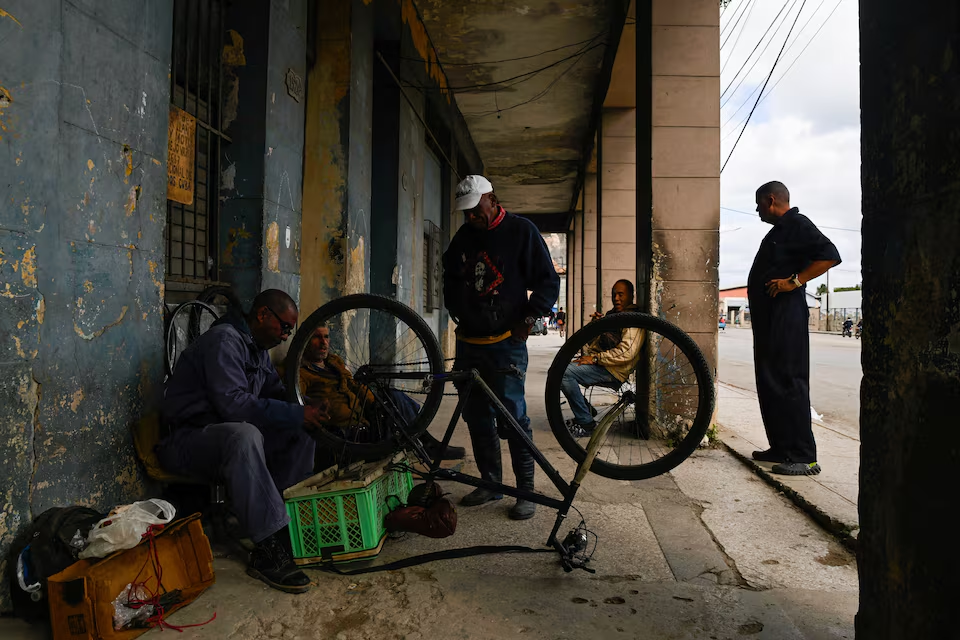
The immediate outlook for Cubans is increased hardship. Rationing will affect transportation, compounding existing difficulties in obtaining food and medicine. The hybrid education model may disrupt learning and place burdens on families. While essential services are protected, their quality could erode due to underlying energy and supply constraints. The government’s ability to maintain social order will be tested. Past crises have led to rare protests, which the regime quickly suppresses. The success of the rationing plan hinges on precise execution and public acceptance of shared sacrifice. However, the deepening of U.S. sanctions leaves little room for error. Cuba faces a period of severe austerity, with its economic model and political stability under unprecedented strain from an external pressure campaign designed to bring it to its knees.