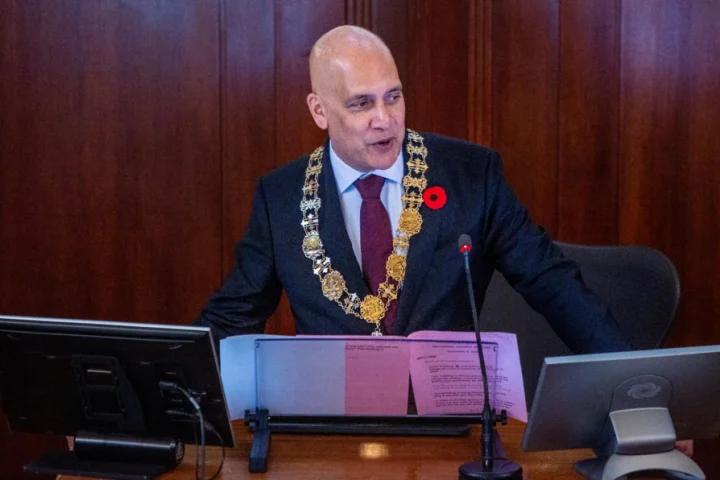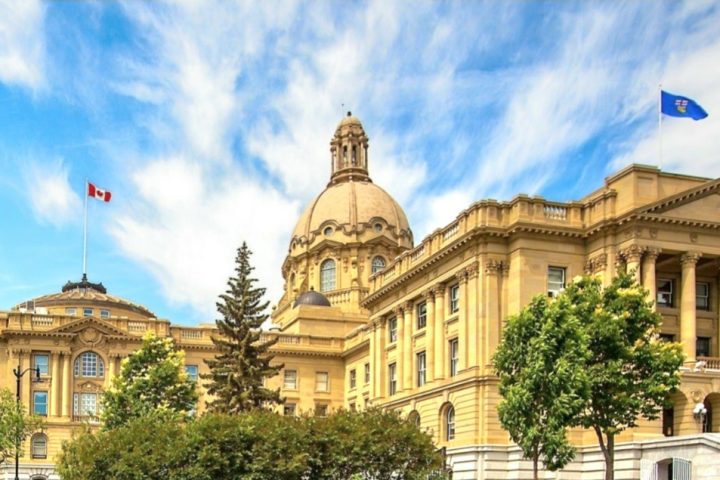
Alberta Premier Danielle Smith has defended proposed electoral boundary changes, rejecting allegations that the new map would unfairly benefit her United Conservative Party.
Speaking on November 3, Smith said the recommendations would improve representation and endorsed controversial changes affecting Lethbridge, where the proposal would replace two city-based constituencies with one urban riding and three districts combining parts of the city with surrounding rural areas.
The Alberta NDP argues that the boundaries favour the governing party. Its leader, Naheed Nenshi, has promised a legal challenge if the government adopts the map.
The allegations remain contested. No court ruling on the proposed map’s legality was identified in the reporting.
Why Lethbridge is at the centre of the dispute
Lethbridge currently has two provincial electoral districts: Lethbridge-East and Lethbridge-West.
The proposed arrangement would distribute the city’s residents across four constituencies, three of which would extend substantially beyond municipal boundaries.
| Arrangement | How Lethbridge would be represented |
|---|---|
| Current boundaries | Two urban constituencies |
| Proposed boundaries | One urban constituency and three mixed urban-rural constituencies |
| Smith’s position | Four representatives could serve the city well |
| Critics’ concern | Combining city neighbourhoods with large rural areas could dilute urban representation and favour the UCP |
Smith argued that Lethbridge would benefit from having four representatives connected to the city.
Critics counter that the number of representatives is only part of the issue. They question whether each constituency would bring together communities with sufficiently similar interests and whether the arrangement would alter electoral competition unfairly.
What are the gerrymandering allegations?
Gerrymandering refers to drawing electoral boundaries to give a political party or group an unfair advantage.
In this case, opponents argue that combining parts of Lethbridge with strongly conservative rural areas could make three of the proposed seats more favourable to the UCP.
University of Calgary political scientist Lisa Young told The Globe and Mail that she viewed the Lethbridge changes as evidence of partisan boundary drawing.
That is her assessment of the proposal, not a judicial finding. Smith rejects the accusation and maintains that the changes are reasonable.
The dispute therefore concerns both the potential electoral consequences of the map and the process used to produce it.
Boundary panel divided over its recommendations
The latest report followed the government’s rejection of an earlier commission’s proposed map.
A legislative committee established in April oversaw a new advisory panel. Official Assembly records show that the panel submitted its report to the committee on October 22, with the report presented to the Legislature on November 2.
The panel itself did not reach a unified position.
Gerard Kennedy, a constitutional law professor at the University of Alberta, and Brent Robinson, a former Okotoks councillor, raised objections in a separate report. Both were selected by the opposition.
They questioned aspects of the proposed boundaries and anticipated a possible constitutional challenge.
The panel’s majority, led by retired judge Brian O’Ferrall, rejected those criticisms and defended its recommendations.
NDP threatens court action
Nenshi has said the NDP intends to challenge the boundaries if they are adopted.
Smith said she hoped the disagreement could be addressed through legislative debate but indicated that the government would assemble a legal team if necessary.
A threatened challenge is distinct from an active court case. At the stage described in the reporting, the map remained a proposal awaiting legislative consideration.
The UCP’s majority gives it considerable influence over that process, but it does not resolve the constitutional objections raised by opponents.
Rural leaders also question hybrid ridings
Concern about mixed urban-rural constituencies extends beyond opposition politicians.
Kara Westerlund, president of Rural Municipalities of Alberta, said rural leaders were worried that their communities’ priorities could receive less attention within hybrid districts.
Politicians from mid-sized cities have expressed a related concern from the opposite direction: urban residents could be represented by someone whose experience and priorities lie outside their city.
These objections show that the debate is not solely about which party might win. It also concerns how an MLA balances communities with different needs across a geographically large constituency.
Election preparations add urgency
Alberta’s next provincial election is scheduled for October 18, 2027.
Elections Alberta has warned that implementing new boundaries—or dealing with delays arising from litigation—could leave insufficient preparation time.
The proposed map was expected to come before the Legislature for debate on November 4. Its adoption, any amendments and a potential court challenge will determine the next steps.
For voters, the immediate issue is which constituency they will belong to at the next election. For the province, the broader question is whether its boundary-setting process can produce a map that commands public confidence despite deep political disagreement.
read Also: Saanich Police Pause Greater Victoria Crime Stoppers Use After Data Breach