The economy of Canada is a highly developed mixed-market system and ranks among the largest in the world. As of 2025, Canada has a nominal GDP of US$2.39 trillion, making it the 9th-largest economy globally. On a purchasing power parity (PPP) basis, it totals US$2.73 trillion, with a GDP per capita of around US$62,000. Its wealth, abundant natural resources, advanced service industries, and global trade relationships position it as one of the world’s most prosperous and stable economies.
Structure of the Economy
Canada’s economy is dominated by the service sector, which accounts for about 70% of GDP and employs three-quarters of the workforce. The industrial sector contributes roughly 28%, while agriculture makes up about 1.5%. This reflects Canada’s transformation from a resource-driven economy to one with a strong services foundation, while still retaining an outsized role for natural resources compared to most advanced economies.
Key Industries
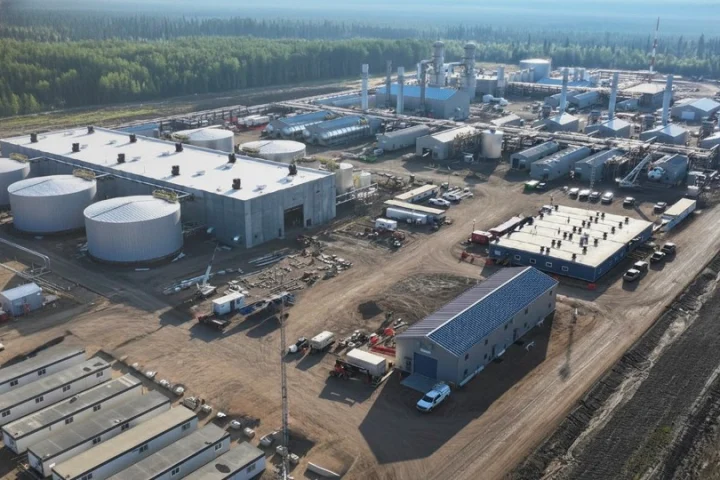
- Energy and Mining: Canada is the fourth-largest holder of oil reserves, primarily in Alberta’s Athabasca oil sands. It is also a leading producer of uranium, potash, nickel, gold, and diamonds.
- Forestry and Fisheries: Lumber, pulp, paper, and seafood exports remain vital to regional economies, especially in British Columbia and Atlantic Canada.
- Manufacturing: The auto industry in Ontario and aerospace in Quebec represent key high-value sectors.
- Finance and Technology: Toronto and Vancouver are major financial and tech hubs, with the Toronto Stock Exchange (TSX) ranking among the top ten globally by market capitalization.
- Real Estate: The housing market contributes over 13% of GDP, reflecting high property values but also raising affordability concerns.
- Tourism and Culture: Cities like Vancouver, Toronto, and Montreal, along with natural landmarks such as Banff and Niagara Falls, attract millions of visitors annually.
Trade and Global Integration
Canada is one of the world’s most trade-dependent nations, with exports and imports together representing over 60% of GDP.
Exports (2024, US$728 billion)
- Motor vehicles and parts
- Machinery and equipment
- Crude petroleum and natural gas
- Chemicals, plastics, and fertilizers
- Timber, pulp, aluminum, and electricity
Imports (2024, US$734 billion)
- Machinery and consumer electronics
- Motor vehicles and parts
- Crude oil and refined petroleum
- Pharmaceuticals and chemicals
Main Trade Partners
- United States – 77% of exports, 49% of imports
- European Union – ~5%
- China – ~4%
- United Kingdom & Japan – ~2–3% each
Canada is a member of major trade organizations, including the WTO, G7, G20, OECD, CPTPP, APEC, and the Canada–United States–Mexico Agreement (CUSMA/USMCA). Its network of 15 free trade agreements with 51 countries makes it one of the world’s most open economies.
Monetary Policy and Finance
The Bank of Canada, established in 1935, manages monetary policy to maintain low and stable inflation, targeting a 2% midpoint between 1–3%. Canada’s financial sector is dominated by the “Big Five” banks—RBC, TD, Scotiabank, BMO, and CIBC—recognized globally for stability. Credit unions also play a significant role, with some of the highest per-capita membership rates worldwide.
Employment and Income
As of 2025, Canada’s labour force is about 21 million, with an unemployment rate of 6.9%. Youth unemployment (ages 15–24) remains higher, at 13.5%. The average gross monthly salary is around C$6,800 (US$5,000). Despite high wages, housing affordability remains a major challenge, particularly in Vancouver and Toronto.
Income inequality is relatively low, with a Gini coefficient of 0.28, and Canada consistently ranks high in the Human Development Index (HDI), placing 16th globally in 2023.
Regional Economic Variation
Canada’s economy is highly regionalized, reflecting geography and resource distribution:
- Western Canada (Alberta, Saskatchewan, BC) – energy, forestry, mining, and port trade.
- Central Canada (Ontario, Quebec) – manufacturing, finance, technology, aerospace.
- Atlantic Canada – fishing, offshore oil, shipbuilding, and tourism.
- Northern Territories – mining, energy, and Indigenous-led development projects.
Strengths and Challenges
Strengths
- World leader in natural resources and clean energy.
- Stable financial system with AAA credit rating.
- Diversified trade agreements, reducing reliance on single markets.
- Highly educated, multicultural workforce.
Challenges
- Heavy reliance on resource exports leaves Canada exposed to commodity price swings.
- High household debt and overheated housing markets raise concerns about financial stability.
- Productivity growth lags behind peer economies, with low business R&D investment.
- Regional economic disparities remain pronounced.
Outlook
Canada’s economy is projected to grow by 1.4–1.6% annually through 2026, modest but stable by advanced-economy standards. Long-term growth will depend on innovation, green energy, infrastructure investment, and integration into the global digital economy. With abundant natural wealth, global trade connections, and strong governance, Canada remains positioned as one of the world’s most resilient economies.