In a major shift in Canada’s automotive policy, Prime Minister Mark Carney is set to announce a new national automotive strategy that will scrap the previously planned electric vehicle (EV) sales mandate. Instead, the government will introduce new vehicle emissions standards and reinstate consumer rebates for EV purchases. This change comes as part of a broader effort to drive innovation in the automotive industry while still prioritizing environmental goals.
Sources familiar with the upcoming announcement, who spoke on the condition of anonymity, revealed that Ottawa will also launch a substantial $1.5 billion fund aimed at expanding the EV infrastructure across the country. This initiative is seen as a key part of the government’s strategy to encourage the adoption of electric vehicles while providing the necessary support for automakers and consumers alike.
Shifting Away from the EV Sales Mandate
One of the most significant aspects of the new automotive strategy is the scrapping of the EV sales mandate, which would have required automakers to ensure a certain percentage of new vehicle sales were electric. Initially, this mandate was set to take effect in 2026 and would have required electric vehicles to make up a substantial portion of new vehicle sales, starting with a 20 per cent target this year. The mandate’s ambitious long-term goal was for all new car sales in Canada to be electric by 2035.
In September of 2025, Carney temporarily paused the mandate, initiating a 60-day review to reassess its feasibility and impact. After months of consultations and deliberations, the government has opted to pivot away from a strict mandate in favor of a more flexible, long-term approach that focuses on emissions standards and fuel efficiency.
New Emissions Standards and Fuel Efficiency Focus
Rather than enforcing a specific percentage of electric vehicle sales, the government will now implement average fuel efficiency standards for automakers. This move is intended to raise the emissions standards for new vehicles while still encouraging automakers to innovate in cleaner vehicle technologies, including electric, hybrid, and fuel-efficient gas-powered vehicles.
The change reflects the government’s desire to introduce a more adaptable approach to reducing emissions, without forcing automakers into rigid sales quotas. By focusing on fuel efficiency and emissions standards, the government aims to ensure that the entire automotive market moves toward lower emissions and reduced environmental impact, regardless of the specific technology behind the vehicles.
Reviving Consumer Incentives for EV Purchases
Along with the new emissions standards, the Canadian government will bring back the popular consumer rebate program for EV purchases. This program had been paused after its funding pool of more than $3 billion was exhausted in previous years. Now, with the reinvigoration of the EV market, the government is looking to replenish the fund and offer fresh incentives to encourage Canadians to make the switch to electric vehicles.
The return of these incentives comes after public pressure and feedback from the automotive industry. Many see the incentives as a crucial element in making electric vehicles more accessible to a broader range of consumers, especially with the rising costs of EVs and the still-developing charging infrastructure.
The $1.5 Billion EV Infrastructure Fund
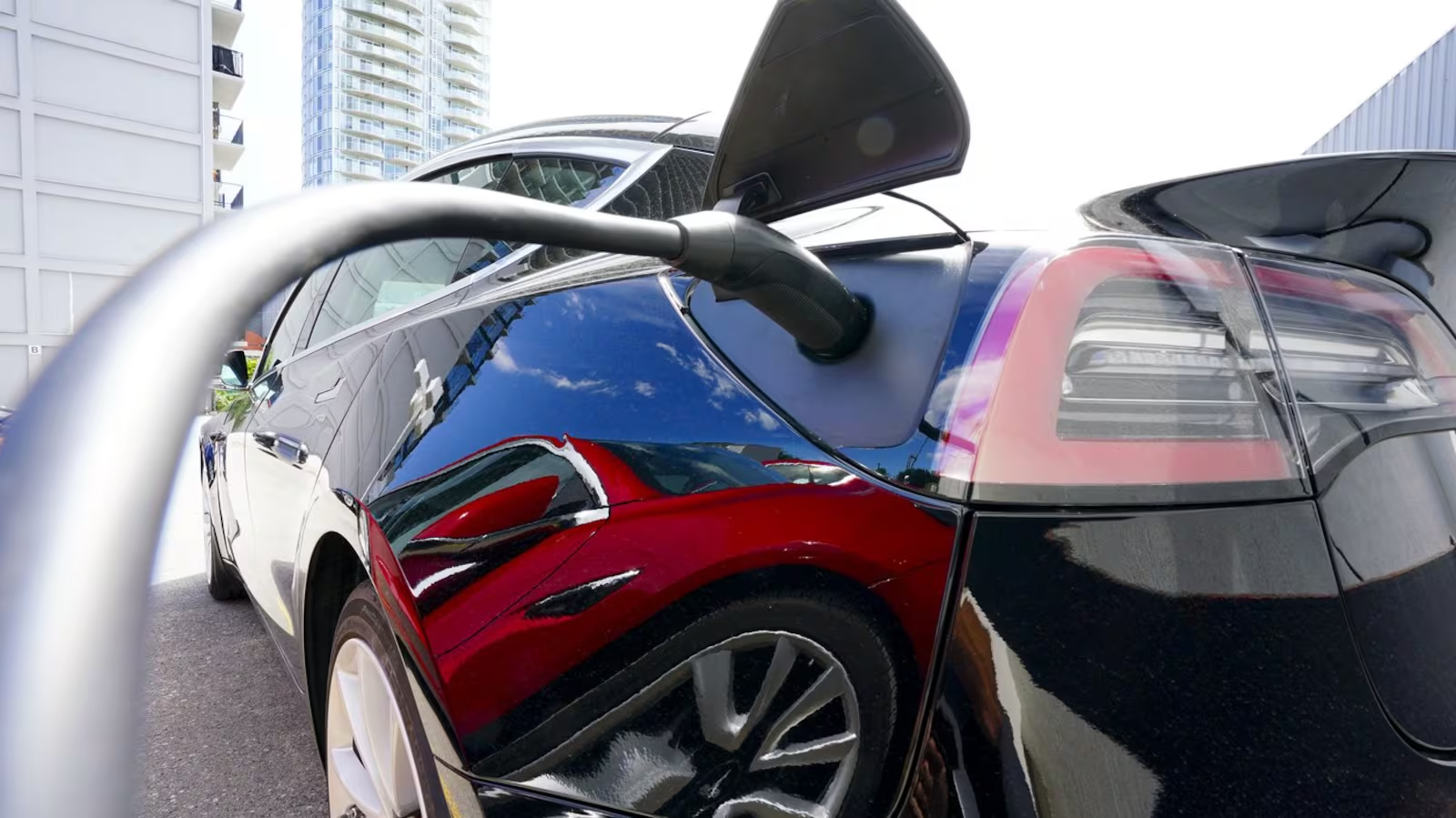
To complement the revised strategy, Ottawa will also launch a $1.5 billion investment fund aimed at expanding the country’s EV infrastructure. This funding will support the installation of new charging stations, particularly in rural and underserved areas, where access to reliable charging stations has been a significant barrier to EV adoption.
The infrastructure fund is expected to be a critical piece of the puzzle for the government as it works to make electric vehicles a more practical option for Canadians. Expanding the network of public charging stations is seen as essential to supporting the growing number of electric vehicles on the road and ensuring that Canadians have access to the necessary resources to transition to electric mobility.
The Liberal Government’s EV Goals
The Liberal government, under former Prime Minister Justin Trudeau, had initially set aggressive targets for electric vehicle adoption, aiming for EVs to account for 20 per cent of all new vehicle sales by 2026, eventually reaching 100 per cent by 2035. However, with the revised strategy, these targets are expected to be re-evaluated in light of the new focus on emissions standards rather than sales quotas.
The shift reflects a broader global trend toward more flexible, market-driven approaches to reducing emissions. While some environmental groups may express concerns about the government’s pivot away from the original mandate, the new strategy is being positioned as a more sustainable and adaptable solution to Canada’s long-term environmental goals.
Looking Ahead: What the Strategy Means for Automakers and Consumers
For automakers, the change in direction means that they will no longer be required to meet specific sales targets for electric vehicles. Instead, they will be expected to meet higher emissions standards and work toward achieving greater fuel efficiency across their fleets. This shift is expected to give automakers more flexibility in how they develop and market their vehicles, while still pushing them to innovate in the area of clean energy.
For consumers, the new incentives and infrastructure investments should make EVs more accessible and practical. With the reinstatement of the rebate program and the expansion of charging networks, Canadians will have more options and support for purchasing electric vehicles.
The government’s revamped approach signals a recognition that transitioning to electric vehicles requires more than just mandates—it requires a comprehensive strategy that includes infrastructure, incentives, and realistic targets that can evolve as technology and market conditions change.