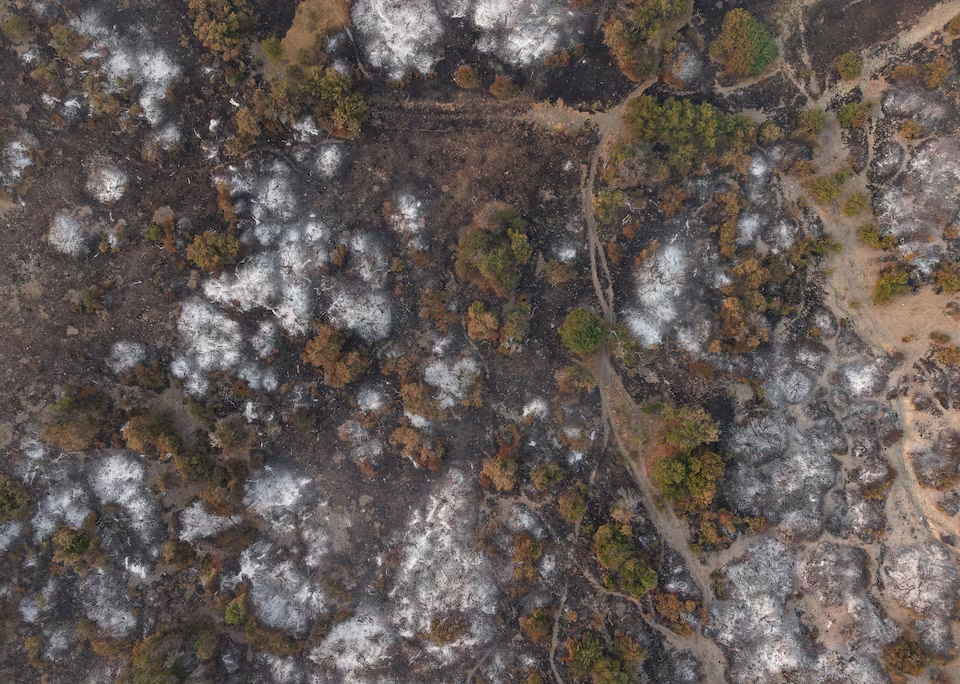
Raging wildfires in Argentina’s Patagonia region have destroyed over 110,000 acres, intensifying criticism of President Javier Milei’s deep austerity cuts. The fires have breached a UNESCO World Heritage site, threatening ancient alerce trees. Meanwhile, the government’s emergency declaration for four southern provinces highlights a crisis exacerbated by policy. Environmental groups directly link the scale of the disaster to drastic budget reductions for fire prevention. Consequently, the blazes have become a potent symbol of the trade-offs inherent in Milei’s “chainsaw” fiscal approach.
The 2026 national budget slashed funding for the National Fire Management Service by seventy-one percent in real terms. This dramatic cut occurred despite predictable seasonal fire risks. The government now pledges about sixty-nine million dollars to support firefighting efforts. However, critics argue this reactive spending is insufficient compared to proactive, gutted prevention programs. Furthermore, Milei’s dismissal of climate change as a “socialist lie” frames the disaster within a broader ideological battle. This stance has drawn sharp rebukes from activists and opposition figures.
The Scale of the Environmental Disaster
The current fires are concentrated in Chubut province, where firefighters battle strong winds and high temperatures. The burned area already exceeds last summer’s total of eighty thousand acres. The flames have entered Los Alerces National Park, a protected area famous for its ancient alerce trees. Some of these trees are over 3,600 years old, ranking as the world’s second-longest-living species. The ecological loss is therefore incalculable and potentially permanent.
The fires began in December and have grown relentlessly. The government’s emergency declaration covers Chubut, Rio Negro, Neuquen, and La Pampa. This move aims to unlock federal funds and resources. However, local officials and firefighters have been operating with diminished capacity from the start of the fire season. The delayed and underfunded response allowed the fires to reach a catastrophic scale. This sequence has fueled public anger and placed Milei’s policies under a harsh spotlight.
Linking the Crisis to Fiscal Policy
Ariel Slipak, an economist at the non-profit FARN, stated the fires were “absolutely predictable.” He accused the government of prioritizing a balanced budget over emergency preparedness “at all costs.” This criticism strikes at the heart of Milei’s governing philosophy. Since taking office, he has pursued aggressive fiscal tightening to address Argentina’s severe economic crisis. His “chainsaw” metaphor proudly advertised deep cuts across nearly all government ministries, including environment and security.
The austerity cuts extended beyond fire services. They also affected environmental monitoring, national park staffing, and climate adaptation programs. The government is even considering following the US in withdrawing from the Paris Climate Agreement. This overall direction suggests a systemic de-prioritization of environmental management. The wildfires now provide a visceral, real-world consequence of those abstract budget lines. The political cost for Milei may rise as the smoke spreads.
Government Response and Ideological Stance
Facing mounting criticism, the Ministry of Security announced the emergency funding allocation. The declaration of an emergency is a formal step to bypass normal budgetary constraints. However, environmental groups view this as a belated and insufficient reaction. They argue that preventing fires is far more cost-effective than fighting them once they rage out of control. The gutted prevention budget made the current massive mobilization necessary.
President Milei’s personal views complicate the response. His description of climate change as a “socialist lie” aligns him with political allies like former US President Donald Trump. This rhetoric undermines scientific consensus and demoralizes the environmental sector. Hernan Giardini of Greenpeace Argentina called the denial “a political irresponsibility.” The government’s apparent skepticism may have trickled down into bureaucratic planning, resulting in inadequate preparation for a known seasonal threat.
Broader Implications for Argentina’s Environment
The Patagonia fires are a symptom of a larger policy shift. Milei’s administration views environmental regulations and spending as impediments to economic liberalization. The potential Paris Agreement withdrawal signals a rejection of international climate cooperation. This could affect foreign investment and trade relationships, especially with climate-conscious partners in Europe. Domestically, it emboldens industries that may have previously faced stricter environmental oversight.
The damage to a UNESCO World Heritage site carries symbolic and practical weight. It may trigger scrutiny from international bodies and affect Argentina’s reputation as a custodian of global natural treasures. Tourism, a vital industry in Patagonia, could suffer long-term blows if landscapes are scarred and parks degraded. Therefore, the impact of the austerity cuts extends beyond immediate firefighting costs. It risks lasting environmental and economic harm to a region known for its pristine beauty.
Political Reckoning and Future Risks
The wildfires present the first major natural disaster test for Milei’s presidency. His poll numbers, initially buoyed by anti-inflation measures, may face pressure if the public perceives mismanagement. Opposition parties are already linking the disaster to the austerity cuts. The imagery of ancient forests burning is powerful and easily understood. It could erode support among moderate voters concerned about more than just the monthly inflation rate.
Looking ahead, the crisis exposes a dangerous vulnerability. Climate models predict increasing frequency and intensity of wildfires in the region. A government that defunds prevention and denies the underlying science is ill-prepared for this future. The current fires may eventually be contained, but the policy framework virtually guarantees a repeat. The political and environmental costs will likely compound each year, creating a cycle of crisis and reaction that Argentina can ill afford.