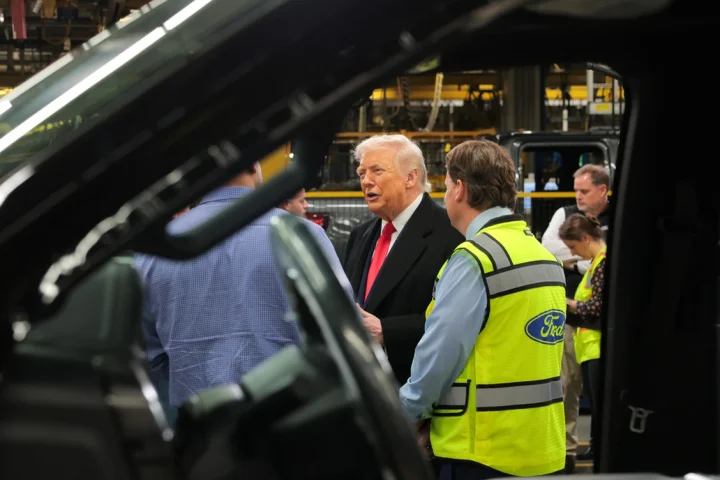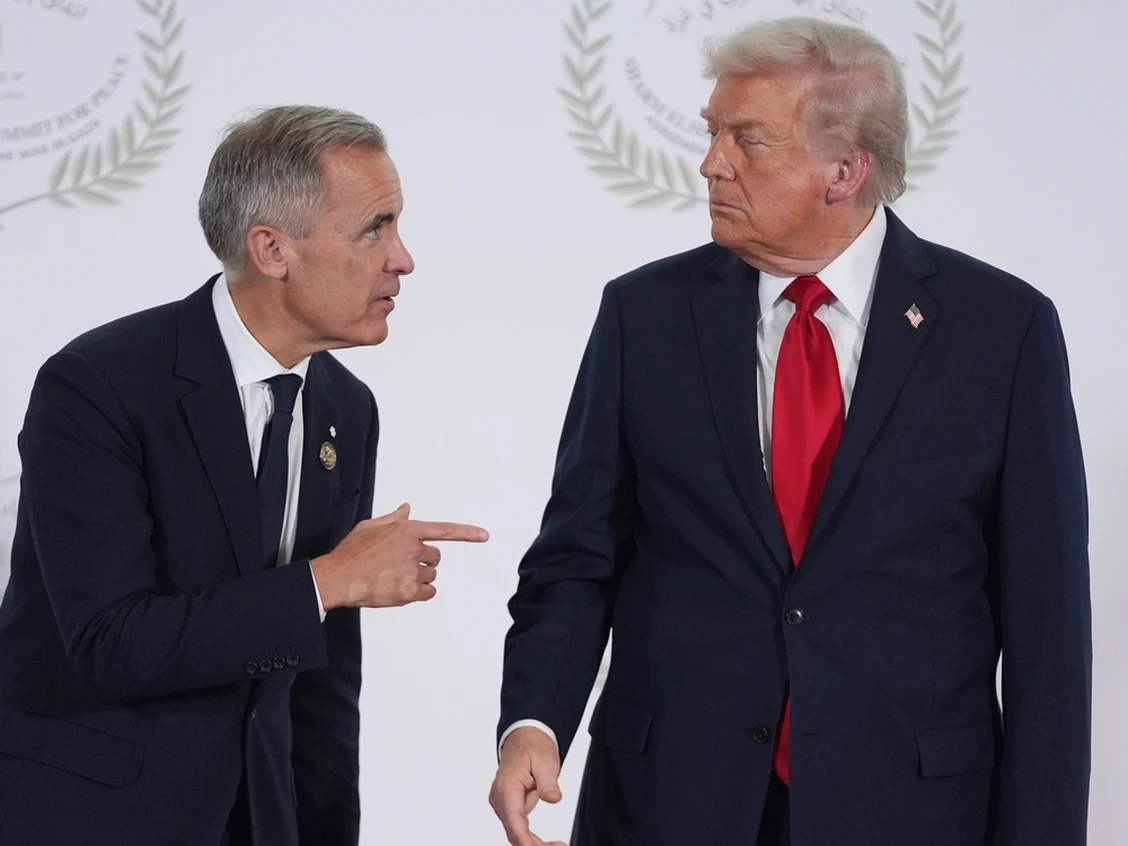
U.S. President Donald Trump is privately considering the possibility of withdrawing from the Canada-U.S.-Mexico Agreement (CUSMA), adding further uncertainty to the ongoing renegotiations of this pivotal trade deal. According to sources familiar with internal discussions, Trump has asked his aides why he should remain in the agreement that he helped negotiate during his first term. However, he has not explicitly stated his intention to pull out, leaving the matter uncertain.
This internal contemplation over the future of CUSMA comes just months before a mandatory review of the agreement, which is set to take place on July 1, 2026. The review is a critical moment for the trade pact, as it will determine whether the agreement is extended and, if so, under what terms.
Speculation and Strategic Ambiguity
White House officials have been cautious about directly addressing the reports of Trump’s dissatisfaction with the deal. One official remarked that Trump is known for seeking better deals for the American people, but also cautioned that discussions about potential actions are speculative at this stage. “Until the president makes an announcement, it’s just speculation,” the official added, reinforcing the idea that Trump’s internal musings have not yet led to a formal decision.
U.S. Trade Representative Jamieson Greer also commented on the situation, suggesting that a simple renewal of the 2019 terms was not in the national interest. He explained that the administration intends to keep its options open and is looking to renegotiate certain aspects of the trade agreement to address ongoing issues. However, Greer did not directly confirm whether Trump was considering pulling out of the pact, only noting that separate negotiations with Canada and Mexico would continue.
Separate Negotiations with Canada and Mexico
In the lead-up to the review, trade negotiations with Mexico and Canada are set to unfold on separate tracks, with U.S. officials acknowledging that their relationship with Canada is more strained than with Mexico. Greer emphasized the differences in the ongoing talks with each country, remarking that Mexico has shown a more pragmatic approach to negotiations, while discussions with Canada have proven more challenging.
“There are a lot of discussions with Mexico, but with Canada, it’s more challenging,” Greer told Fox Business. These comments underscore the varying dynamics of U.S.-Canada and U.S.-Mexico relations in the context of CUSMA, with Canada’s position proving more difficult for the U.S. administration to navigate.
Mexican President Downplays Threat of U.S. Withdrawal
Despite the uncertainty surrounding Trump’s stance, Mexican President Claudia Sheinbaum downplayed the likelihood of the U.S. withdrawing from CUSMA. Sheinbaum dismissed the speculation, stating during a press conference that the possibility of a U.S. exit from the trade deal had never been seriously discussed in recent calls with U.S. officials. “We don’t believe it, and it has never been said in the calls, because it is very important to them,” Sheinbaum said.
The Mexican leader’s comments reflect the ongoing importance of CUSMA to Mexico’s economy, which has benefited significantly from the agreement’s provisions, particularly in terms of trade access to the U.S. market. Sheinbaum’s statements also highlight the Mexican government’s belief that the U.S. will not risk disrupting such a vital trade relationship, despite the internal uncertainties in Washington.
CUSMA’s Crucial Review
The mandatory review of CUSMA, which is set to occur in July 2026, is expected to be a key turning point for the agreement. Under the terms of the deal, the agreement is subject to a review after six years, and the outcomes of this process could either lead to a renewed extension of the deal or a reworking of its provisions. The review is likely to center on issues such as trade imbalances, regulatory changes, and the evolving geopolitical landscape.
For Canada, the potential loss of CUSMA could have serious economic consequences. Bank of Canada Governor Tiff Macklem has previously warned that a withdrawal from the agreement would likely lead to a recession in Canada, highlighting the economic interdependence of the three North American countries. The agreement has been instrumental in fostering trade and investment across the continent, and its loss would undoubtedly disrupt these flows.
A Delicate Diplomatic Dance
As the clock ticks toward the July 1 review deadline, all three countries involved in CUSMA—Canada, the U.S., and Mexico—will need to carefully navigate the complexities of these negotiations. Trump’s private deliberations about exiting the deal inject an additional layer of uncertainty into an already tense situation. While the U.S. administration remains committed to renegotiating aspects of the agreement, it is unclear how these talks will unfold and whether they will lead to a more favorable outcome for all parties involved.
The fate of CUSMA rests on the ability of the three nations to resolve their differences, with a particular focus on trade imbalances and policy shifts that reflect the current economic climate. While Mexico appears confident that the U.S. will stay committed to the deal, Canada remains in a more precarious position, waiting to see how Trump’s internal deliberations will ultimately shape the future of North American trade.