In a bid to support the US economy, the Federal Reserve has decided to reduce its key lending rate by 0.25 percentage points, lowering it to a range of 3.75% to 4%. This decision marks the second consecutive rate cut after the Fed’s September 2025 meeting, amid concerns about a slowing labor market.
Despite the ongoing US government shutdown, which has delayed crucial economic data, the central bank pressed forward with the rate reduction. This decision was taken against the backdrop of inflation concerns taking a backseat to growing worries over unemployment, with some sectors of the economy seeing sluggish hiring.
A Data Void Amid Economic Uncertainty
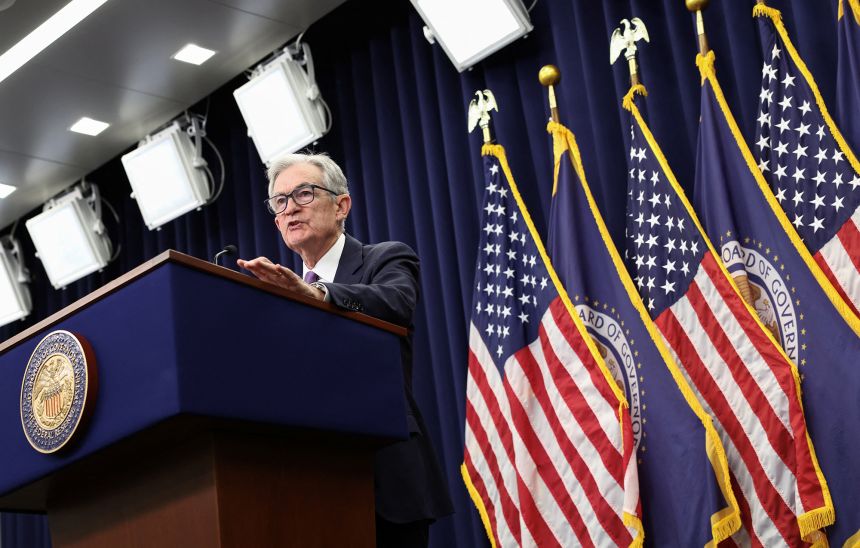
The decision to cut rates was not without controversy. The shutdown has caused a data drought, leaving the Federal Reserve “flying blind” about the true state of the US job market. According to Jerome Powell, the Fed Chair, the labor market appears “less dynamic and somewhat softer” than earlier in the year. While unemployment is still low, Powell noted a mild increase in the unemployment rate, signaling that the job market is facing challenges.
The September jobs report was delayed due to the shutdown, and economists have pointed to alternative data sources, such as private-sector figures, showing continued sluggish hiring. Notably, ADP reported that the US economy lost 32,000 jobs in September, a worrying sign for future growth.
The Federal Reserve’s Split Opinion
Notably, the Fed’s decision wasn’t unanimous. Two voting members on the Fed’s policy committee dissented on the rate cut. Stephen Miran, a member of President Trump’s economic advisory team, favored a larger 0.5% cut to stimulate the economy further. Jeffrey Schmid, president of the Federal Reserve Bank of Kansas City, advocated for holding rates steady.
Despite these disagreements, the Fed’s target interest rate is now at its lowest level in three years. While the central bank has prioritized supporting the job market, Powell cautioned that future cuts are not guaranteed, especially considering ongoing economic uncertainties.
A Fragile Economic Landscape: The Impact on Inflation and Tariffs
The US inflation rate is still above the Fed’s 2% target, but recent figures showed a 3% year-over-year increase for September 2025, which was lower than expected. This reading allowed the Fed to focus more on stimulating the labor market rather than curbing inflation, which remains tied to tariff-driven price hikes.
President Trump had previously pushed for tariffs on numerous foreign goods, which increased the cost of imports and contributed to inflation. However, Powell reassured the public that the Fed views tariff-induced inflation as a temporary situation, aiming for price stability over the long term.
The Road Ahead: December Cuts Still Uncertain
While the interest rate cut provides immediate relief to borrowers, questions remain about future monetary policy. Market analysts had been expecting another rate cut at the Fed’s final meeting of 2025 in December. However, Powell made it clear that a December cut is not a foregone conclusion.
Powell stated that “future moves are becoming more contentious” among Fed members, and the decision will depend heavily on incoming economic data, particularly regarding the labor market and inflation.
Conclusion: A Balancing Act for the Fed
As the Federal Reserve continues to navigate economic uncertainty, its decisions will remain critical in shaping the US economy in the coming months. While interest rate cuts can provide immediate relief, the long-term effectiveness of such measures will depend on the stability of the job market and inflation control. With a government shutdown still in effect and the economic landscape shifting, the Fed faces a challenging path forward as it strives to balance growth and inflation in an increasingly volatile environment.