Thanksgiving in Canada (French: Action de grâce) is a national holiday celebrated annually on the second Monday of October. It is a time of reflection and gratitude, marking the harvest season and giving thanks for the year’s blessings. Although distinct from the American holiday of the same name, Canadian Thanksgiving shares similar traditions of feasting, family gatherings, and religious or cultural observance.
Origins and Early Celebrations
The roots of Thanksgiving in Canada trace back to 1579, when English explorer Martin Frobisher held a ceremony in Newfoundland to thank God for safe passage during his search for the Northwest Passage. Some historians argue this was one of the earliest European Thanksgiving services in North America.
Later, in the early 1600s, French explorer Samuel de Champlain and settlers held feasts with Indigenous peoples, forming the Order of Good Cheer and sharing food in a spirit of community and survival.
By the late 18th century, following the Seven Years’ War and the influx of United Empire Loyalists from the United States, Thanksgiving customs such as turkey, pumpkin, and squash were introduced to Canadian tables.
Historical Development
- 1799 – Halifax residents held Thanksgiving to commemorate British military victories.
- 1816 – Lower Canada and Upper Canada celebrated separately after the War of 1812, with dates tied to specific events.
- April 5, 1872 – The first official post-Confederation Thanksgiving was celebrated, marking the recovery of the Prince of Wales (later King Edward VII) from illness.
- 1879 – Parliament declared Thanksgiving a national holiday, though the date varied annually.
- 1921–1930 – Thanksgiving was combined with Armistice Day after World War I, celebrated in November.
- 1931 – The holidays were separated; Armistice Day became Remembrance Day, and Thanksgiving continued independently.
- 1957 – The Canadian Parliament fixed the holiday as the second Monday in October, under a proclamation by Governor General Vincent Massey, officially recognizing it as a “Day of General Thanksgiving to Almighty God for the bountiful harvest with which Canada has been blessed.”
Traditions and Celebrations
Thanksgiving in Canada reflects both European harvest festivals and North American traditions:
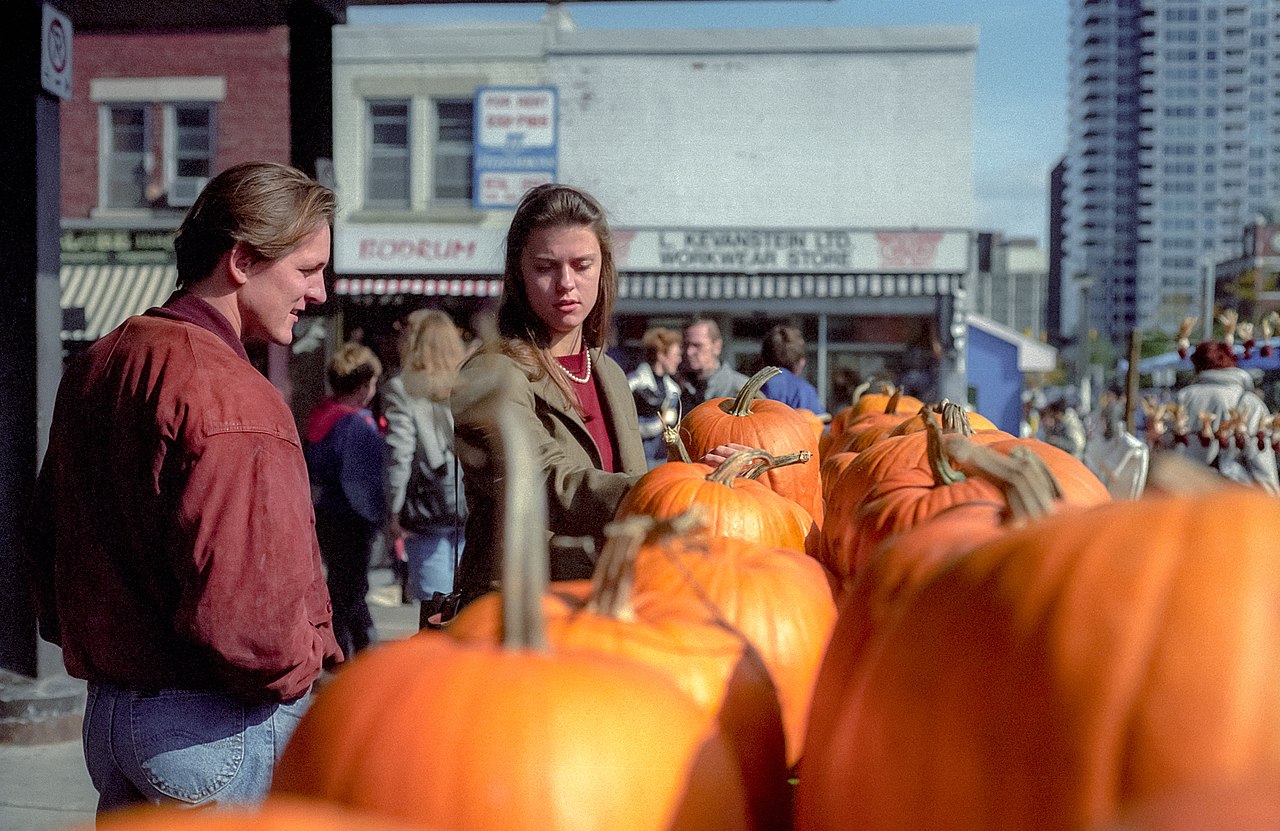
- Feasts often include roast turkey, stuffing, mashed potatoes with gravy, sweet potatoes, cranberry sauce, corn, and pumpkin pie. Regional variations may feature salmon, wild game, Jiggs dinner in Newfoundland, or butter tarts and Nanaimo bars for dessert.
- Religious services and church decorations with cornucopias, pumpkins, and wheat sheaves highlight gratitude for harvests.
- Community festivals are common. The Markham Fair (Ontario), Kitchener-Waterloo Oktoberfest parade, and Fort Langley Cranberry Festival in British Columbia are popular pre-Thanksgiving events.
- Canadian football plays a role through the Thanksgiving Day Classic, a tradition where the Canadian Football League (CFL) hosts nationally televised games.
Statutory Status
Thanksgiving is a statutory holiday in most provinces and territories, except Prince Edward Island, Newfoundland and Labrador, Nova Scotia, and New Brunswick, where it is optional. Federally regulated industries, such as banking and telecommunications, observe the holiday nationwide.
Modern Perspectives
While widely celebrated, Thanksgiving in Canada carries mixed meanings:
- For many, it remains a joyful family gathering centered on gratitude and seasonal abundance.
- Some Indigenous communities have raised concerns, viewing it as a holiday that overlooks the history of colonization and the dispossession of their lands. Others participate by adapting it into their own traditions.
Dates
Thanksgiving in Canada is observed annually on the second Monday in October:
- 2024 – October 14
- 2025 – October 13
- 2026 – October 12
- 2027 – October 11
Significance
Thanksgiving in Canada symbolizes gratitude, harvest, and unity, blending Indigenous contributions, Loyalist traditions, and European influences. Its October observance reflects Canada’s earlier harvest season compared to the United States, and the holiday continues to evolve as both a cultural and family-centered event.