On January 3, 2026, President Donald Trump’s administration achieved a remarkable success with a daring U.S. special forces operation that led to the capture of Venezuelan leader Nicolás Maduro. The operation, carried out in the early hours of the morning, has been hailed as an unprecedented military achievement, drawing praise from many, including Secretary of State Marco Rubio, who called it a “tremendous success.” While the operation has sparked intense debates, with praise from some quarters and criticism from others, it marks a new chapter in the Trump administration’s approach to foreign policy and the Western Hemisphere. This article examines the details of the operation, its implications for Venezuela, and the broader geopolitical consequences.
The Operation: A Bold and Precise Action
The mission to capture Maduro was carried out with exceptional precision, culminating in an airstrike and a helicopter-borne raid on Caracas. The U.S. had been preparing for this operation for months, amassing intelligence and building an extensive model of Maduro’s compound. The military’s planning paid off, with U.S. forces executing the raid flawlessly, landing helicopters within minutes and swiftly capturing Maduro and his wife, Cilia Flores. The operation was over in less than 30 minutes, with no reported casualties among American forces and no damage to U.S. assets.
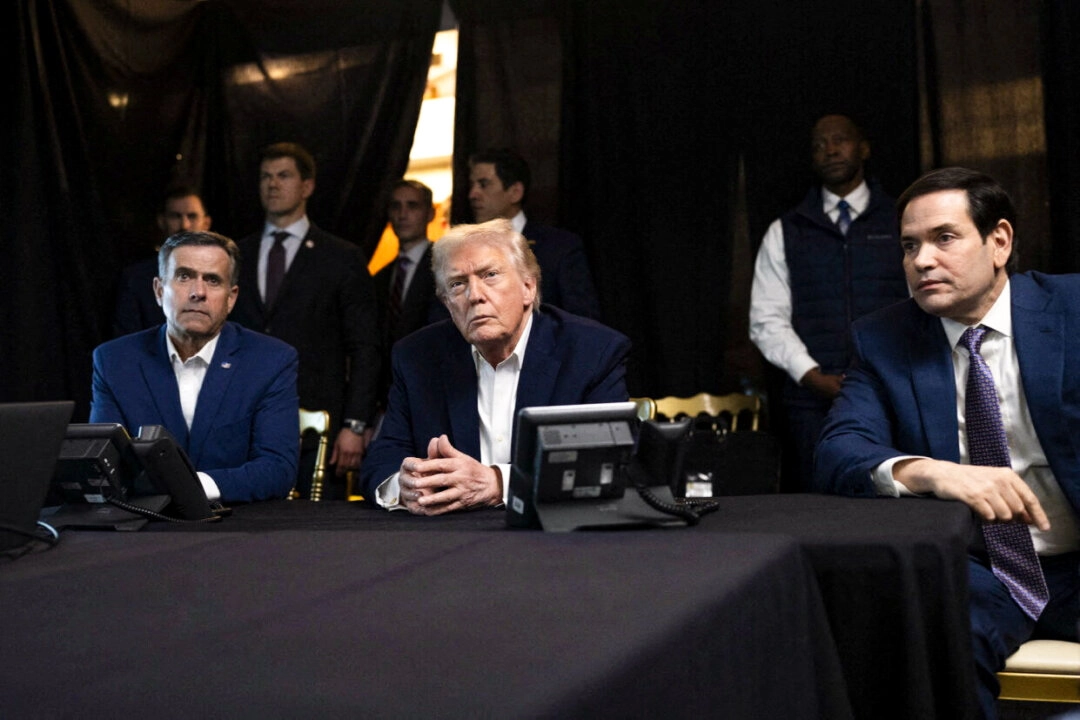
President Trump spoke to reporters, praising the operation as a “fantastic success,” highlighting the meticulous preparation that ensured its success. The operation’s speed and efficiency caught many by surprise, demonstrating the capabilities of U.S. special operations forces. According to reports, U.S. forces managed to reach the compound before Maduro and his wife could barricade themselves in a safe room, potentially stalling the operation.
Trump’s description of the mission’s success was emphasized by Secretary of State Marco Rubio, who underscored the difficulty of executing such a high-risk operation. “Landing helicopters in the middle of the largest military base in the country, kicking down doors, and extracting the leader in minutes—that’s no easy mission,” Rubio said, further emphasizing the operation’s strategic brilliance.
Political Reactions: Praises and Concerns
The aftermath of the operation has sparked a wide range of reactions. Many Republicans have praised the action as a decisive move in protecting U.S. interests and removing a longstanding adversary. House Speaker Mike Johnson (R-La.) and Senate Majority Leader John Thune (R-S.D.) voiced their support, expressing gratitude for the brave men and women of the U.S. military who executed the operation.
However, some Democratic lawmakers have raised concerns about the legitimacy of the action, questioning Trump’s authority to launch a military operation without prior congressional approval. “Our Constitution places the gravest decisions about the use of military force in the hands of Congress,” Senator Mark Warner (D-Va.) stated, adding that such a move could set a dangerous precedent for unchecked executive power.
Despite the opposition, there have been some Democratic voices who commended the U.S. military for executing the operation with precision. Senator John Fetterman (D-Pa.) praised the U.S. military, highlighting its strength and effectiveness. “Today proves that we have the strongest and most lethal military in the world,” Fetterman wrote on social media, showing a rare alignment with Trump’s foreign policy decision.
Trump’s New Foreign Policy: A Shift Towards the Western Hemisphere
The operation in Venezuela reflects a broader shift in U.S. foreign policy under the Trump administration. Unlike traditional foreign policy approaches, which focus heavily on regions like the Middle East, Trump’s “America First” strategy prioritizes the Western Hemisphere, emphasizing regional security and economic interests.
Trump’s National Security Strategy, released in November 2025, outlines this new focus. By placing the Western Hemisphere at the center of U.S. priorities, the administration seeks to prevent the region from becoming a base of operations for adversaries such as Russia and China. Rubio defended the Venezuela operation, citing the strategy’s emphasis on regional stability: “We’re not going to allow the Western Hemisphere to be a base of operation for adversaries, competitors, and rivals of the United States.”
The decision to act in Venezuela is part of a larger U.S. strategy to curb the influence of adversarial powers in the region. While the administration has not abandoned global concerns, it is clear that Trump’s priorities lie closer to home, where Venezuela’s instability poses a direct challenge to U.S. interests.
The Future of Venezuela: A Delicate Transition
While the U.S. intervention in Venezuela has been hailed as a tactical victory, the future of the country remains uncertain. The immediate removal of Maduro was only the first step in a complicated process of transition. As Delcy Rodríguez, the acting leader of Venezuela, continues to navigate the delicate political landscape, questions remain about the military’s role in the country and whether Venezuela can rebuild its fractured political system.
Evan Ellis, a Latin American expert, noted that the real test will be whether the Venezuelan military and its allies choose to cooperate with the U.S. to ensure a peaceful transition. While the U.S. has demonstrated the ability to remove senior figures from power, the challenge now lies in fostering cooperation from the various factions within Venezuela.
In the coming months, Venezuela will need to address its economic collapse, restore its oil industry, and rebuild key infrastructure. International support will be crucial, but the political and military landscape remains volatile, with armed groups and entrenched military factions potentially resisting change.
Geopolitical Repercussions: The Broader Impact on Latin America
The operation in Venezuela has far-reaching geopolitical implications. While many Latin American countries may view the removal of Maduro as a positive development, the U.S. intervention raises concerns about the future of regional stability. Russia and China, both of whom have supported Maduro’s government, are likely to resist U.S. involvement in Venezuela, further complicating the situation.
The U.S. must also manage its relationships with other Latin American countries, many of which have been affected by the Venezuelan crisis. The mass migration of Venezuelans to neighboring countries, along with the regional impact of Venezuela’s economic collapse, has created tensions in the region. Trump’s intervention could further strain U.S. relations with certain Latin American governments, particularly those that favor non-interventionist policies.
A Defining Moment in Trump’s Legacy
The successful operation to capture Maduro is likely to be remembered as a defining moment in President Trump’s foreign policy. While the move has been praised for its boldness and execution, the true impact of the intervention will depend on the long-term stability and democratic transition of Venezuela. The challenges ahead are formidable, and the U.S. will need to carefully manage the aftermath to avoid further destabilization. Whether this operation will be viewed as a triumph of U.S. foreign policy or a reckless gamble remains to be seen, but for now, the world watches as Venezuela embarks on an uncertain path toward recovery.