Prime Minister Mark Carney asserts that Canadian oil will remain competitive globally, even if Venezuela’s production surges under a new regime. He argues Canada’s advantages are its low-risk profile, falling costs, and progress on reducing carbon intensity. This stance contrasts with Opposition Leader Pierre Poilievre, who called for urgent approval of a new pipeline to the Pacific Coast in response to changing geopolitics.
Carney’s Confidence in Canada’s Comparative Advantages
At a press conference in Paris, Carney addressed concerns about Venezuela. He stated Canadian oil is “low-risk, low-cost, and low-carbon.” He cited the Pathways Alliance carbon capture project as key to maintaining a competitive edge. Carney argued this combination ensures competitiveness for the “medium and long term,” regardless of developments in South America.
He also highlighted Canada’s ongoing market diversification efforts. The recent comprehensive memorandum of understanding (MOU) with Alberta aims to expand exports beyond the United States, particularly to Asia. Therefore, Canada is not solely dependent on the U.S. market where Venezuelan crude could theoretically compete.
Poilievre’s Call for Accelerated Pipeline Approval
Opposition Leader Pierre Poilievre presented a different view. He argued the shift in Venezuela necessitates a faster domestic response. Specifically, he urged Canada to “race to approve a pipeline to the Pacific Coast.” This would enhance export capacity to Asian markets and reduce reliance on the U.S. The debate underscores a classic political divide: confidence in existing strategy versus a push for rapid infrastructure development.
Context: Venezuela’s Potential vs. Canada’s Output
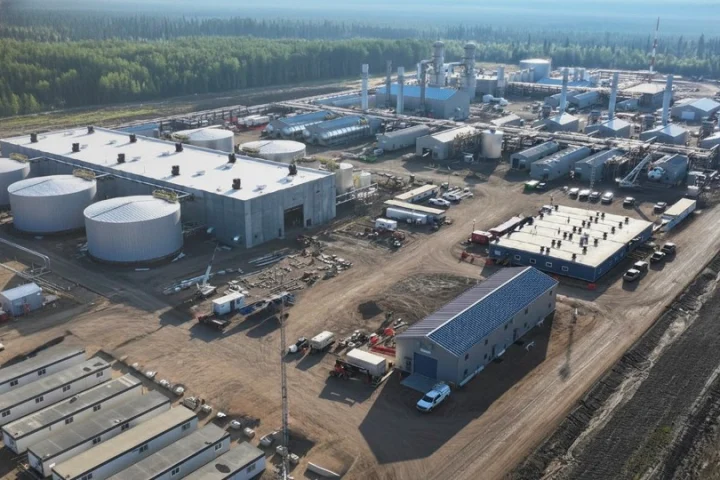
The comparison is stark. Venezuela possesses the world’s largest proven oil reserves but produced only about 900,000 barrels per day in 2024 due to systemic collapse. Canada’s oilsands produce nearly five million barrels daily, mostly exported to the U.S.
Carney welcomed potential prosperity for Venezuela, calling the removal of the “illegitimate, corrupt, repressive” Maduro government a positive development. He believes a legitimate Venezuelan economy producing more oil would benefit the hemisphere. However, he does not see this as a direct threat to Canada’s established industry and diversification plans.
The Carbon Factor as a Future Differentiator
A central part of Carney’s argument is the low-carbon attribute. The Pathways Alliance, a collaboration of major oilsands companies, plans a massive carbon capture and storage network. This project aims to significantly reduce emissions from production. In a world increasingly focused on carbon intensity, this could become a crucial competitive advantage over producers like Venezuela, which would likely prioritize rapid production restart over environmental upgrades.
For updates on Canada’s energy policy, follow the Government of Canada’s natural resources page. The Pathways Alliance provides details on its carbon capture initiative.
Prime Minister Carney projects confidence in Canadian oil’s competitiveness, betting on its stability, cost efficiency, and environmental progress. While geopolitical shifts are creating new variables, the government’s strategy leans on diversification and decarbonization rather than a reactive pipeline push. The coming years will test whether this nuanced approach can secure Canada’s position in a volatile global market.