A Surprising Shift in U.S.-Denmark Relations
In a dramatic about-face, U.S. President Donald Trump has announced that he will drop his earlier threats to impose tariffs on European countries that opposed his plans to acquire Greenland. After weeks of escalating tensions, Trump’s decision to rule out the use of force in acquiring the territory and to seek diplomatic negotiations with Denmark marks a significant shift in his approach to Greenland and the Arctic. This change comes after a high-level meeting with NATO Secretary-General Mark Rutte, during which they reportedly reached a “framework” for a future agreement on the Arctic region and Greenland’s security. While the decision has been welcomed by European leaders, the details of the agreement remain scarce, leaving questions about the long-term implications for Greenland’s sovereignty and its relationship with the United States.
The Greenland Controversy: Trump’s Bid for Control
President Trump’s interest in Greenland has long been a subject of speculation and controversy. The U.S. leader has repeatedly expressed his desire to acquire the island, citing its strategic importance due to its location in the Arctic region, as well as its vast untapped natural resources, including valuable minerals and oil reserves. Greenland, a semi-autonomous territory of Denmark, has been at the center of geopolitical discussions, particularly as global powers like China and Russia increase their presence in the Arctic.
In 2024, Trump’s administration escalated its efforts to acquire Greenland, first proposing the idea to Denmark, only to be rejected. Undeterred, Trump began threatening to impose tariffs on Denmark and other European countries unless an agreement was reached to allow the U.S. to purchase the island. This threat, coupled with rhetoric about the U.S.’s need to “secure” Greenland from foreign influence, led to a tense standoff between the U.S. and Denmark. Denmark, backed by European allies, has steadfastly maintained that Greenland is not for sale and that any attempt to take it by force would jeopardize the unity of NATO, the military alliance that includes both the U.S. and Denmark.
A Diplomatic Shift: Trump’s New Approach to Greenland
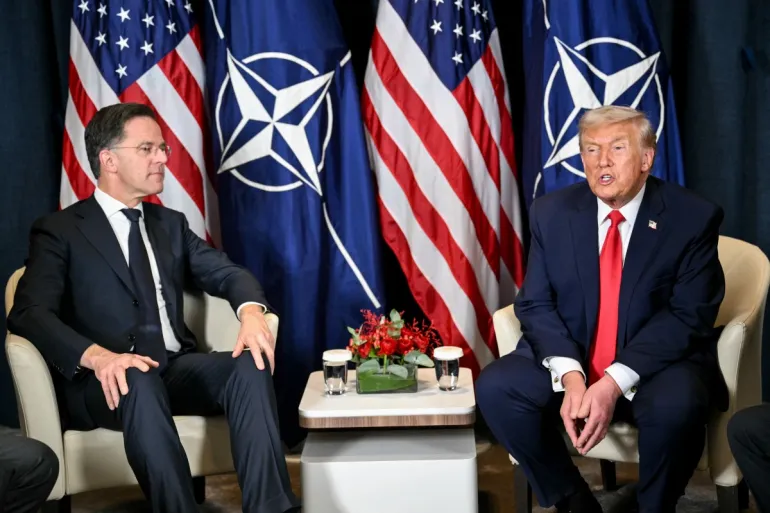
In a surprising turn of events, Trump dropped his tariff threat and ruled out the use of force during a meeting with NATO Secretary-General Mark Rutte at the World Economic Forum (WEF) in Davos, Switzerland, on January 21, 2026. The president emphasized that the U.S. would pursue a diplomatic resolution and negotiations rather than military action. Trump also revealed that he and Rutte had reached an agreement on a “framework” for future discussions about Greenland’s security and the broader Arctic region, which he claimed would be beneficial for both NATO nations and the U.S.
“We need it for strategic national security and international security,” Trump said of Greenland in an interview following the Davos meeting. “This enormous, unsecured island is actually part of North America. That’s our territory.” However, Trump’s comments raised further questions about the future of Denmark’s sovereignty over Greenland, even as he reiterated that no force would be used to take control.
The announcement was welcomed by European leaders, including Danish Foreign Minister Lars Lokke Rasmussen, who had been vocal about Denmark’s firm stance on retaining sovereignty over Greenland. Rasmussen expressed relief over the de-escalation, but firmly stated that Denmark would not allow the U.S. to take ownership of the island. “It’s not going to happen that the United States will own Greenland,” he asserted.
NATO’s Role: A Collective Effort to Secure the Arctic
The primary concern that has driven Trump’s interest in Greenland is the strategic importance of the Arctic region. With melting ice opening up new shipping routes and the potential for significant resource extraction, the Arctic has become a key area of geopolitical competition, particularly between the U.S., Russia, and China. NATO, the alliance that encompasses both the U.S. and Denmark, has become increasingly involved in discussions surrounding Arctic security.
During his meeting with Trump, NATO Secretary-General Mark Rutte stated that the framework for future discussions would not involve discussions of sovereignty but would instead focus on the collective security of the Arctic region. Rutte emphasized that the framework would address security concerns, particularly in light of Russian and Chinese ambitions in the area. NATO’s spokeswoman, Allison Hart, clarified that the discussions would center on how to ensure that no foreign powers, including Russia and China, gain economic or military footholds in Greenland or the broader Arctic region.
The Arctic and Global Security: What’s at Stake?
The Arctic’s geopolitical importance has risen in recent years due to climate change, which is causing the ice sheets to melt and opening up new trade routes. This has led countries to increase their interest in the region, with both Russia and China expanding their influence. In 2025, Russia bolstered its military presence in the Arctic, while China has sought to establish itself as a key player in the region through its “Polar Silk Road” initiative.
For the U.S., securing Greenland is seen as critical to maintaining its dominance in the Arctic. The island’s proximity to Russia and its potential for resource extraction make it an attractive asset. However, Denmark has made it clear that it will not relinquish control over Greenland, which is home to around 56,000 people. Greenland’s residents, who have expressed concern over being caught in the middle of international disputes, have repeatedly voiced their desire to remain under Danish sovereignty.
The Future of Greenland: Sovereignty and Strategic Interests
While the U.S. may have temporarily stepped back from its aggressive stance, the issue of Greenland’s future remains unresolved. Denmark and Greenland continue to hold firm on their sovereignty, with no plans to cede control of the island. However, the increasing strategic importance of the Arctic, along with the growing presence of global powers in the region, suggests that this debate will continue for years to come.
As the U.S. and NATO countries focus on securing the Arctic from outside influence, particularly from Russia and China, the role of Greenland in this broader security framework will remain a key point of negotiation. The “framework” that Trump and Rutte discussed in Davos will likely shape the future of U.S.-Denmark relations, as well as the security arrangements in the Arctic.
A Temporary Pause in Tensions
For now, President Trump’s decision to drop the tariff threat and rule out the use of force marks a de-escalation in what has been a tense dispute over Greenland. The focus now shifts to negotiations and discussions about the Arctic’s security and the role of NATO in safeguarding the region. While Denmark’s sovereignty over Greenland remains unchallenged for the moment, the strategic importance of the island, coupled with the increasing geopolitical stakes in the Arctic, suggests that the conversation about Greenland’s future will continue to evolve in the years ahead.