Canada joins the EU defence programme known as the Security Action for Europe (SAFE). This landmark move signals a strategic shift. Ottawa is now diversifying its military procurement away from the United States. As the first non-European nation in this $170 billion initiative, Canada deepens its transatlantic ties. This decision is a direct response to global instability.
The SAFE Initiative and Canada’s Accession
The European Union launched the SAFE rearmament fund earlier this year. Rising security concerns were the primary driver. Specifically, fears of Russian aggression and questions about U.S. protection prompted action. Consequently, the 150-billion-euro fund aims to boost EU defence readiness by 2030.
A “Tremendous Opportunity” for Canadian Industry
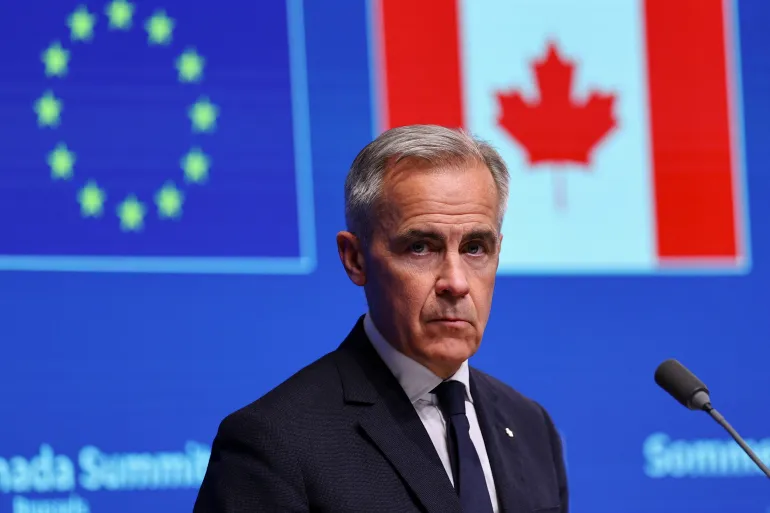
Prime Minister Mark Carney praised the decision. He said it grants Canadian defence companies “tremendous opportunities” in Europe. In a joint statement, Carney and EU Commission President Ursula von der Leyen highlighted deepening cooperation. Practically, this move will fill Canadian capability gaps. It also opens new markets for suppliers. Finally, it should attract European investment to Canada.
A Direct Pivot from the U.S.
This strategic move follows a clear policy shift. Carney had already vowed to diversify procurement. He stated that over 70 cents of every dollar in military spending would no longer go to the U.S. Subsequently, relations with the Trump administration soured. A trade war and remarks about Canadian sovereignty accelerated the pivot. Therefore, reducing U.S. dependency became a strategic necessity.
Strategic Implications and Global Reactions
Canada’s accession to a European defence fund reshapes transatlantic security. It also alters global defence dynamics.
Reshaping Transatlantic Defence Ties
Traditionally, Canada’s defence was linked to the U.S. through NORAD and NATO. Now, joining the SAFE initiative creates a more balanced strategy. Essentially, it forges a direct Ottawa-Brussels security link. As a result, Canada may gain greater influence in European defence planning.
A Signal to Washington and the World
The decision sends a clear signal. It shows that allies will seek alternatives amid unilateral U.S. policies. Globally, it marks a notable moment of defence diversification. A key U.S. partner is now in a European military framework. This could encourage other nations to follow.
Looking Ahead: Opportunities and Challenges
Success depends on execution and managing complexities.
Industrial Integration and Capability Development
The main challenge is industrial integration. Canadian firms must now compete within EU supply chains. Success could lead to co-developed technologies. Conversely, failure might make the political gesture hollow.
Balancing Multiple Alliances
Canada must expertly balance its commitments. It must reassure NATO while leveraging its new EU role. Managing potential U.S. displeasure will require diplomacy. Ensuring interoperability with existing U.S. equipment is also crucial.
A New Chapter in Canadian Defence
Ultimately, Canada’s decision to join the EU defence programme is a historic recalibration. It responds to a dangerous world and strained ally relations. Therefore, Canada is investing in its strategic autonomy and industrial future. This bold pivot aims to deliver greater security and prosperity.