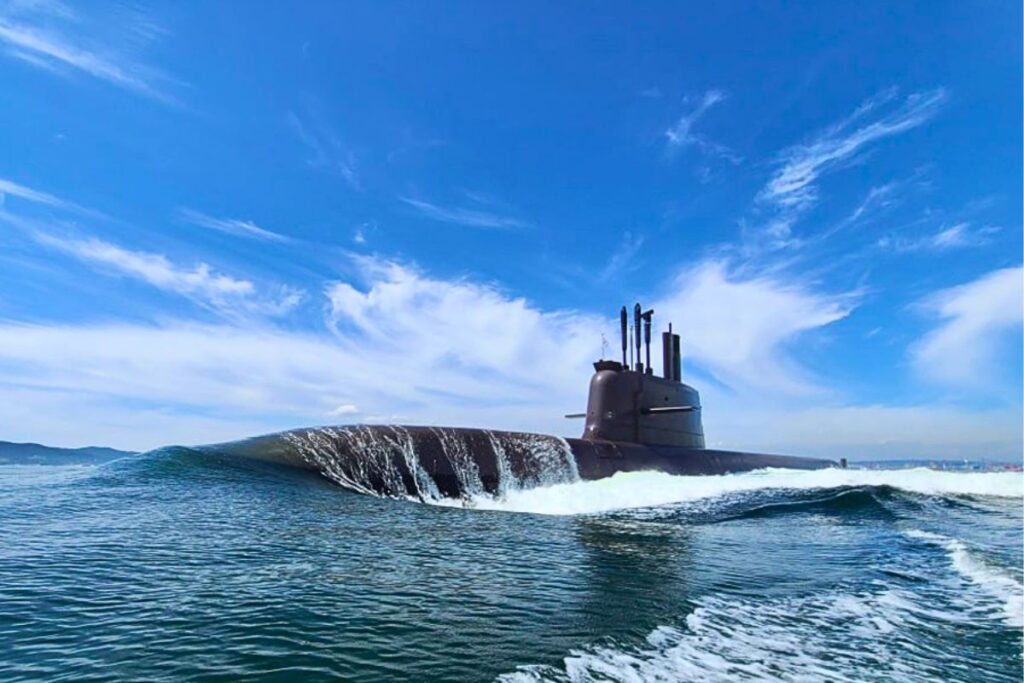
South Korean defence manufacturer Hanwha is intensifying its bid for a major Canadian naval contract by planning a high-profile voyage of one of its advanced attack submarines across the Pacific Ocean.
The company aims to showcase its KSS-III submarine off the coast of British Columbia this spring as part of its campaign to secure the Hanwha Canadian submarine deal, which would replace Canada’s aging Victoria-class fleet.
If successful, the project could become one of the largest defense procurements in Canadian history.
Submarine Set to Arrive off British Columbia
The KSS-III vessel is currently undergoing maintenance at the Janae Naval Base in South Korea. Once ready, it is expected to embark on a two-month journey across the Pacific.
Officials say the submarine is scheduled to surface near British Columbia in late May, allowing Canadian officials and industry representatives to view the vessel firsthand.
The demonstration is intended to highlight the submarine’s long-range endurance, technical capabilities, and operational reliability.
Canadian Officials Tour Hanwha Facilities
Canada’s Secretary of State for Defence Procurement, Stephen Fuhr, recently toured Hanwha’s shipbuilding facilities in Geoje, South Korea.
During the visit, Fuhr inspected two Hanwha-built submarines. One recently completed vessel is still undergoing testing, while the other is already in active service with the Republic of Korea Navy.
He also toured an uncertified KSS-III submarine, although security restrictions prevented photography inside the vessel.
Advanced Capabilities of the KSS-III
The KSS-III represents a major upgrade compared to Canada’s existing submarines. Unlike the Victoria-class fleet, the KSS-III is equipped with vertical launch systems capable of firing missiles at land targets.
The submarine also carries multiple torpedoes and features advanced stealth and sensor systems. Weighing approximately 3,000 tonnes, it can accommodate around 50 crew members.
These enhanced capabilities would significantly expand Canada’s maritime defence and surveillance capacity.
Decision Hinges on Cost and Benefits
While praising the technology, Fuhr emphasized that the final decision would depend on several key factors.
“These decisions always come down to cost, timelines, and economic benefits for Canadians,” he said.
Also read: Carney tours newly completed South Korean sub as Canada weighs multi-billion dollar order
Hanwha and its main competitor, Germany’s TKMS, must submit final bids by March 2. The federal government plans to name a preferred supplier by the end of 2026.
Officials estimate that up to twelve submarines may be purchased under the program.
Also read: Panama Court Annuls CK Hutchison Port Contracts, Blocks Sale
Job Creation and Industrial Growth
The submarine replacement program is expected to generate substantial economic activity across Canada.
Fuhr said the project would require extensive infrastructure investment and could create thousands of jobs on both the Atlantic and Pacific coasts.
Construction, maintenance facilities, and supply chains would need to be developed to support the new fleet over several decades.
“These investments will help ensure Canada is ready when the submarines arrive,” he said.
Hanwha Strengthens Canadian Partnerships
To strengthen its bid, Hanwha has been forming partnerships with Canadian companies and signing memorandums of understanding with domestic suppliers.
Recently, the company pledged to loan Algoma Steel $275 million to help build a new beam mill in Ontario. It also committed to purchasing an additional $70 million in steel.
However, the agreement is contingent on Hanwha winning the submarine contract.
Steel Industry Sees Strategic Opportunity
Algoma Steel CEO Rajat Marwah said the partnership could be crucial for the company’s long-term transformation.
He noted that recent trade tariffs severely reduced U.S. business, contributing to layoffs of about 1,000 workers.
Marwah described the potential collaboration with Hanwha as “fundamental” to expanding into new products and strengthening Canada’s defence supply chain.
Automation Impresses Canadian Shipbuilders
Representatives from Ontario Shipyards were also part of the delegation to South Korea. They expressed admiration for Hanwha’s advanced manufacturing systems.
Vice-president Ted Kirkpatrick said the company produces around 45 ships annually, with most welding work completed by robotic systems overseen by human supervisors.
Only about 10% of welding is done manually, allowing for faster production and consistent quality.
Technology Transfer Could Transform Shipbuilding
Ontario Shipyards has signed an agreement with Hanwha to introduce similar automation technology in Canadian facilities.
Kirkpatrick said this could shorten construction timelines and enable domestic yards to build larger, more complex vessels.
If implemented, the partnership could significantly modernize Canada’s shipbuilding sector and improve its global competitiveness.
Competition with German Shipbuilder TKMS
Hanwha is competing directly with Germany-based ThyssenKrupp Marine Systems (TKMS) for the contract.
Both companies are emphasizing local investment, technology transfer, and workforce development in their proposals.
The federal government is evaluating technical performance, long-term costs, industrial benefits, and strategic considerations before selecting a supplier.
Strategic Importance for Canada’s Navy
Canada’s current submarine fleet is aging, and maintenance costs continue to rise. Defence analysts say replacement is critical to maintaining maritime security and NATO commitments.
Modern submarines would enhance Canada’s ability to patrol Arctic waters, monitor shipping routes, and participate in international missions.
The Hanwha Canadian submarine deal could reshape the country’s naval capabilities for decades.
Looking Ahead
The planned Pacific voyage represents a bold marketing move by Hanwha and reflects the high stakes of the competition.
With billions of dollars and thousands of jobs on the line, the decision will influence Canada’s defence posture and industrial strategy well into the 2040s.
As bids are finalized and evaluations continue, all eyes will be on Ottawa’s choice later this year.