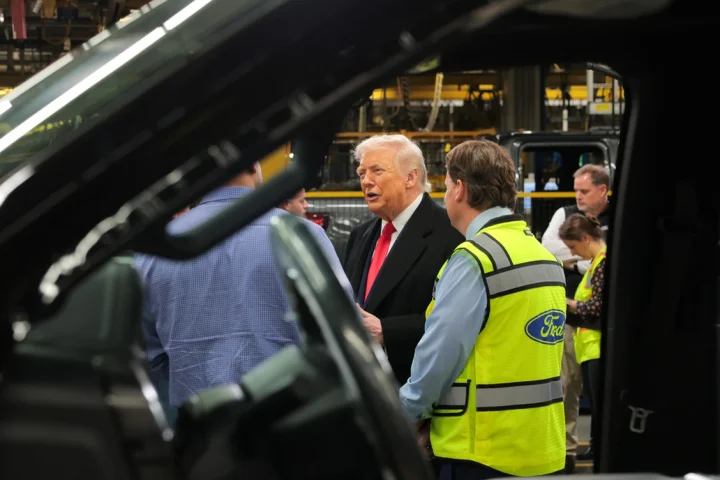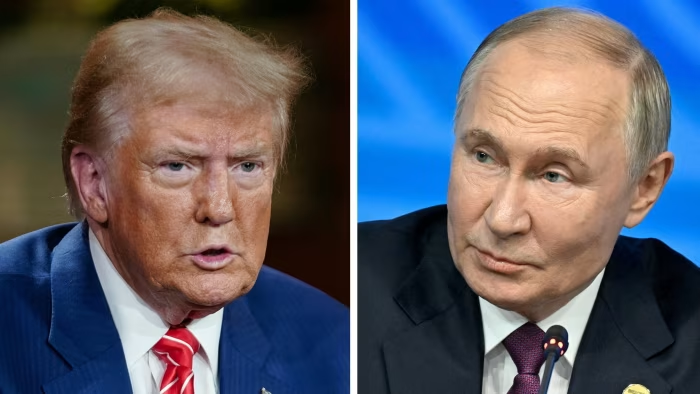
The latest Trump Russia sanctions target Moscow’s two largest oil companies — Rosneft and Lukoil — in an effort to pressure the Kremlin to negotiate peace in Ukraine. The decision, announced from the White House, signals a major foreign policy shift for President Donald Trump, who had previously hesitated to impose such measures until Europe reduced its dependence on Russian oil.
Trump admitted that his frequent talks with Vladimir Putin had “good conversations that don’t go anywhere,” announcing that a planned meeting in Budapest was now indefinitely postponed. “I just felt it was time,” he said, describing the sanctions as “tremendous” but hinting they could be lifted if Russia agrees to a ceasefire.
Treasury Secretary Scott Bessent said the sanctions were necessary due to “Putin’s refusal to end this senseless war,” stressing that the targeted oil giants fund Russia’s military operations.
Energy and Global Impact
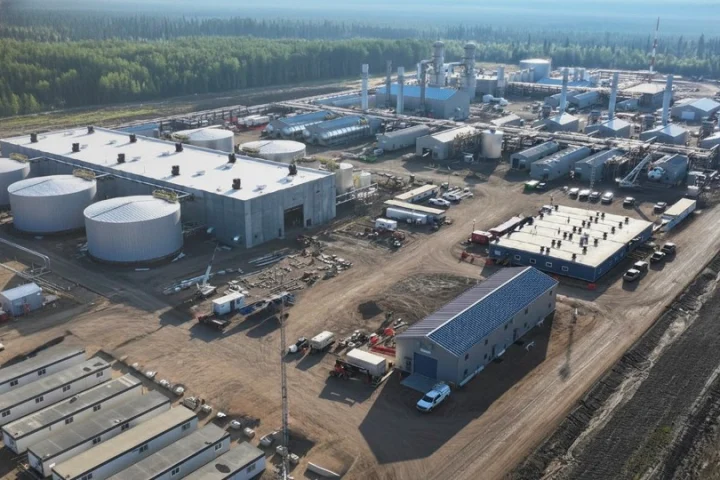
Rosneft and Lukoil together export more than 3.1 million barrels of oil daily, nearly 6% of global production. The Trump Russia sanctions could strain Moscow’s economy, though analysts say their overall impact may be modest since Russia still sells large volumes to China, India, and Turkey.
India is reportedly preparing to scale back its imports following the announcement, while China has condemned the move. The Kremlin called the U.S. actions “futile,” insisting Russia remains “immune to pressure.”
The sanctions come as Ukraine intensifies its attacks on Russian oil infrastructure, seeking to weaken Moscow’s financial base. Ukrainian President Volodymyr Zelensky welcomed Washington’s decision, calling it “a good signal” and urging other allies to take similar action.
International Reactions and NATO Support
NATO Secretary General Mark Rutte, present at the White House during the announcement, praised the move as “necessary pressure” to bring Putin to the negotiating table. European leaders, including EU Commission President Ursula von der Leyen, echoed support, unveiling parallel sanctions and a timeline to end imports of Russian liquefied natural gas by 2028.
Trump, meanwhile, continues to balance diplomacy with deterrence. His administration portrays the United States as a neutral broker seeking a ceasefire, even as tensions deepen over stalled peace talks.
As fighting rages in Kyiv and across eastern Ukraine, the Trump Russia sanctions mark a renewed attempt to reshape the diplomatic and economic landscape — a gamble that could either push Moscow toward negotiation or harden its resolve further.